Underground conduit detection and locating
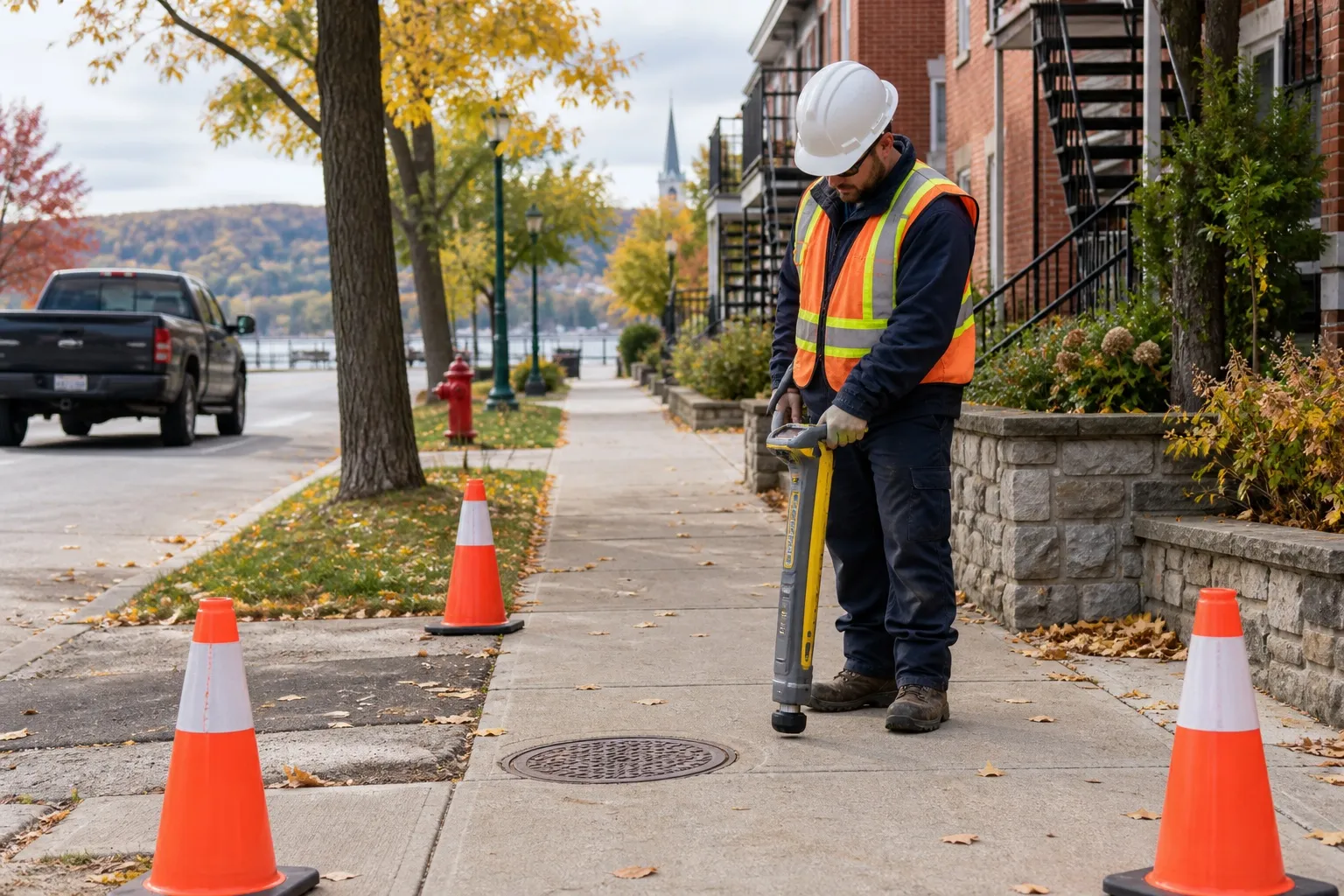
Underground conduit locating gives you the exact path and depth of buried electrical, telecom, gas and drainage conduits before you dig a trench, drill or install piles. Détection Souterraine Québec locates metallic conduits with radio detection and PVC, polyethylene or concrete conduits with GSSI ground penetrating radar, then marks them on the ground and records them on a PDF plan.
- PDF report within 24 hours
- Submit your Info-Excavation request for public utilities, and entrust us with the private utilities on your property.
At a glance
- Metallic and non-metallic conduits
- Path marked on the ground, estimated depth at each marker
- Transmitting sonde to follow an empty conduit or a drain
- PDF report within 24 hours
- Montreal, Laval, South Shore, Châteauguay, Dorval
The conduits we locate
| Conduit type | Common material | Method |
|---|---|---|
| Electrical conduit | Steel, PVC | Radio detection (metal), ground penetrating radar or sonde (PVC) |
| Telecom and fibre conduit | PVC, HDPE | Sonde in the conduit, ground penetrating radar |
| Gas line | Steel, polyethylene with tracer wire | Radio detection on tracer wire |
| Drain and sewer | PVC, concrete, cast iron | Sonde in the line, ground penetrating radar |
| Irrigation conduit | PVC | Ground penetrating radar |
| Abandoned lines | Various | Ground penetrating radar |
An empty PVC conduit cannot be detected with radio detection. We insert a transmitting sonde or use ground penetrating radar, depending on access.
How we work
- Finding access points: meter, junction box, manhole, catch basin or visible end of the conduit.
- Radio detection: a signal is injected into the metallic conduit or tracer wire, then followed on the surface with the receiver.
- Sonde or ground penetrating radar for non-metallic conduits.
- Marking and plan: the path is painted on the ground in the utility's colour, then recorded on the report plan with depths.
Typical situations
- Trench for a new electrical or telecom service connection
- Directional drilling that must pass under existing conduits
- Installing piles, posts or a fence near a gas line
- Repairing a drain without knowing where it runs
- Expanding a parking lot or a driveway
Why choose Détection Souterraine Québec
- A method suited to the material: we do not depend on a single technology.
- Depths given at each marker, not just the path.
- A clear report the excavator can read on site.
- The same team for water line and cable locating if your project involves several utilities.
Related services
Underground utility locating for a complete site survey, water line locating and underground cable locating.
Frequently asked questions
How much does underground conduit locating cost? The price of underground conduit locating depends on the number of conduits, the length of the paths and access to the connection points. A single conduit on a residential property often takes less than half a day. Request a quote for an accurate price.
Can you locate a PVC conduit? Yes, with a transmitting sonde inserted into the conduit, or with ground penetrating radar if the conduit is inaccessible. Radio detection alone does not detect plastic.
How deep can you detect a conduit? Radio detection follows a metallic conduit several metres deep. Ground penetrating radar generally reaches one to three metres in Quebec soils, less in saturated clay. The report specifies the reliability of each depth.
Do you mark the conduit on the ground? Yes, with paint in the utility's colour and depth markers, then on the PDF plan.
Resources on this service
All resourcesLocating underground pipes before any excavation
Learn how locating underground pipes before excavation prevents strikes, secures your job site and complements an Info-Excavation request.
Info-Excavation Montreal for locating utilities before digging
Learn how Info-Excavation Montreal works, which utilities are covered or not, and the steps to locate your pipes before digging on the island.
Schedule your underground conduit locating
Describe the conduit you are looking for, the planned work and the city. Reply within 24 to 48 business hours.
- PDF report within 24 hours
- Submit your Info-Excavation request for public utilities, and entrust us with the private utilities on your property.