Info-Excavation is the non-profit organization that centralizes locate requests in Quebec, free of charge. It forwards each request to the member utility owners, who come to mark their buried infrastructure up to the property line. The service is essential, but it only covers its members' utilities.
Before digging in Quebec, one reflex is a must, and it has a name: Info-Excavation. Many contractors, plumbers and property owners hear this name without really knowing how the service works, what it covers and where its responsibilities end.
Understanding this mechanism means avoiding costly strikes, project delays and, above all, preventable accidents. Here is a clear picture of the organization's role, its members and the path a request follows.
What Info-Excavation is and what the service is for
Info-Excavation is a non-profit organization recognized as Quebec's only damage prevention centre for underground infrastructure. Its mandate is simple: reduce strikes on buried utilities during excavation work.
The organization acts as a one-stop shop. Rather than contacting each electricity, gas or telecommunications distributor separately, the person who wants to dig submits a single request. This locate request centre then takes care of reaching the right owners.
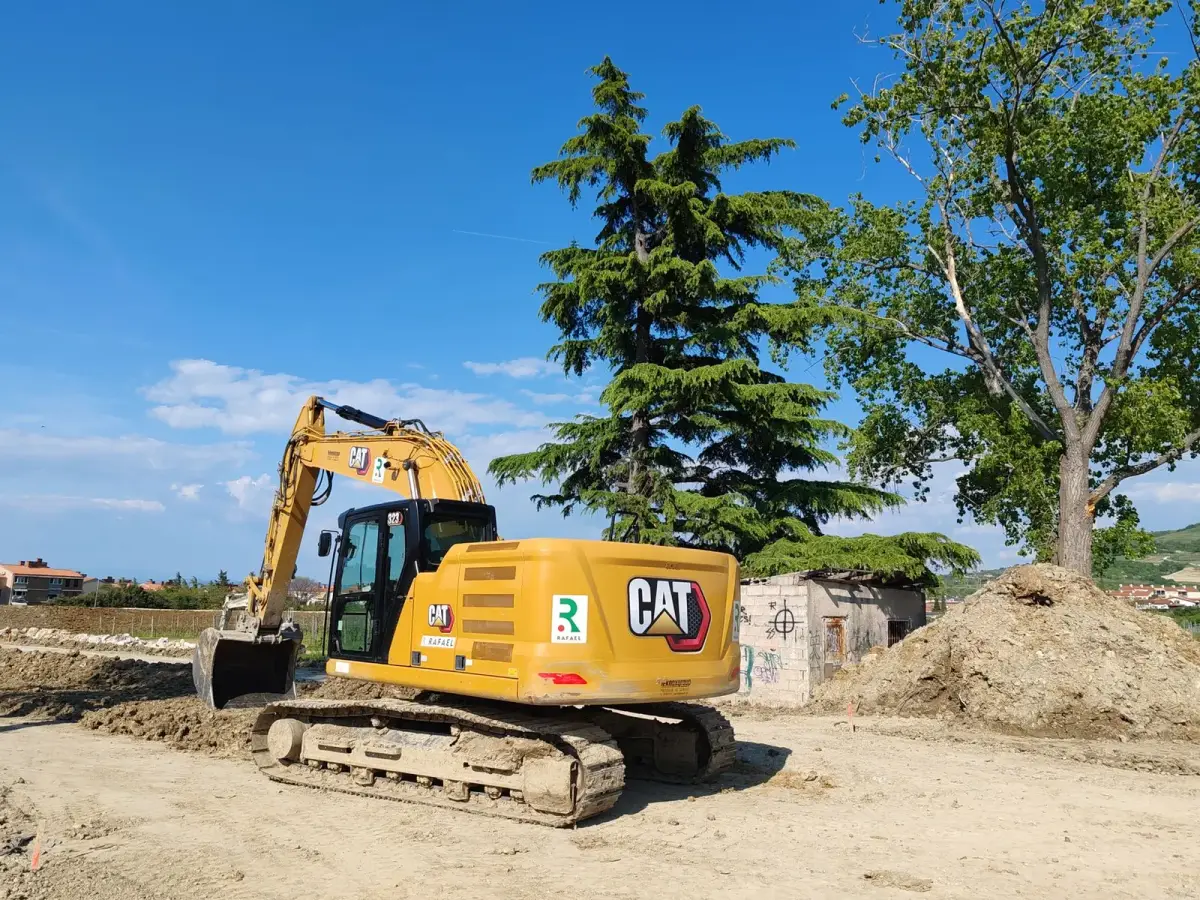
A free service available at any time
The locate service is offered free of charge, regardless of project size, from simple residential digging to a large commercial job site. The request is made online, at any time, which makes prevention accessible to everyone.
This free access is not a minor detail. It removes any financial excuse and encourages every excavator to check the subsurface before the first shovelful. To fully understand the complete process, it is worth reviewing the questions to ask before excavating.
Who the member utility owners are
The service relies entirely on its members. They are the utility owners who declare their infrastructure, respond to requests and come to mark it on site. Without their participation, no locating is possible.
Members generally include the major operators of buried utilities in Quebec:
One point deserves particular attention. Not all municipalities are members. When a city does not participate, you must contact it directly to find out where its pipes are located. This detail explains why a request, even one filled out perfectly, does not always guarantee a complete picture of the subsurface.
- Electricity distributors, such as Hydro-Québec
- Natural gas distributors, such as Énergir
- Telecommunications companies, such as Bell
- Many municipalities for their water and sewer systems
- Other operators of buried linear infrastructure
How a locate request is processed
The path is simpler than it seems. Once the request is submitted, the organization analyzes the work area and forwards it only to the member utility owners present at that location. Each one then responds for its own part.
Here are the main steps of the three-step locate request process:
1. The excavator fills out a request specifying the address and the nature of the work. 2. The request is sent to the members whose utilities are in the area. 3. Each owner marks its installations on the ground or confirms there are none.
According to the tools published by Simplex, member owners normally have three business days to respond. You must therefore allow at least four business days before digging, counting the day of the request. You can place a free locate request directly online.
The golden rule remains the same. Wait for all responses before starting. A single unlocated utility, a gas line or a power cable, can be enough to cause a serious accident or a service interruption for an entire neighbourhood.
Are you planning work and wondering how to secure a subsurface where not all utilities are documented? Review your situation with a specialist before digging.
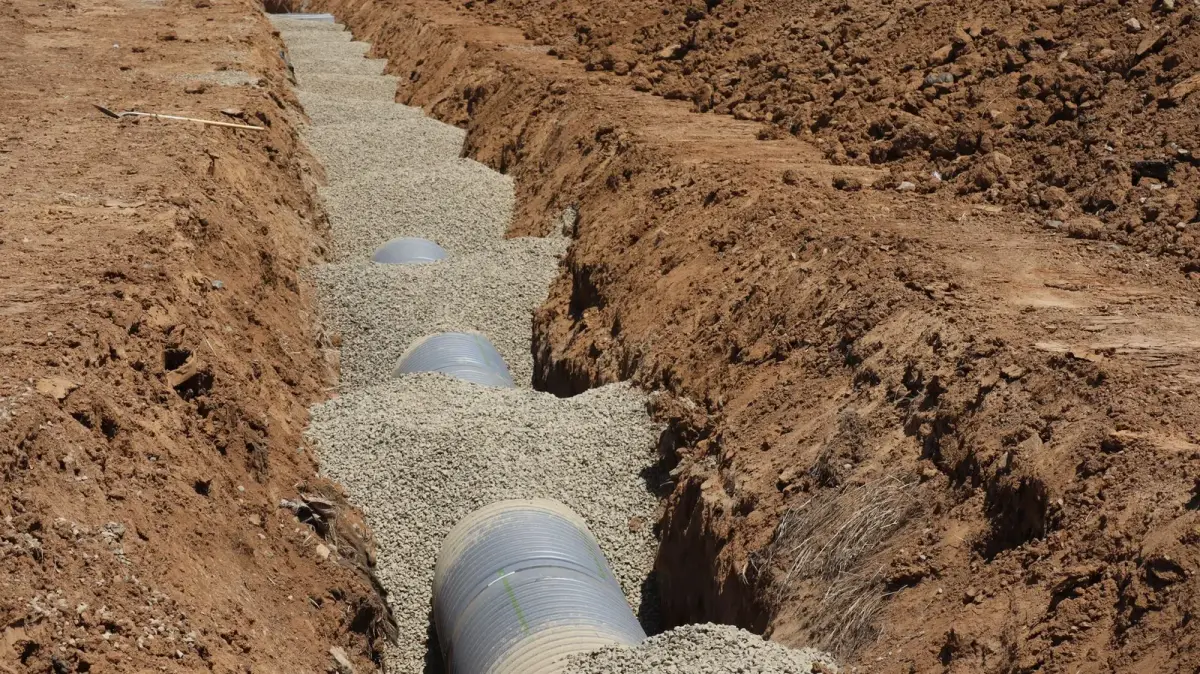
What the service covers and what it does not
This is where the most important and most often misunderstood nuance lies. The service locates the members' utilities, up to the property line only. Anything beyond that, on private land, falls outside its coverage.
Private installations buried on a property therefore remain invisible to the organization. This is precisely what distinguishes private utilities from public utilities and creates a real blind spot for property owners.
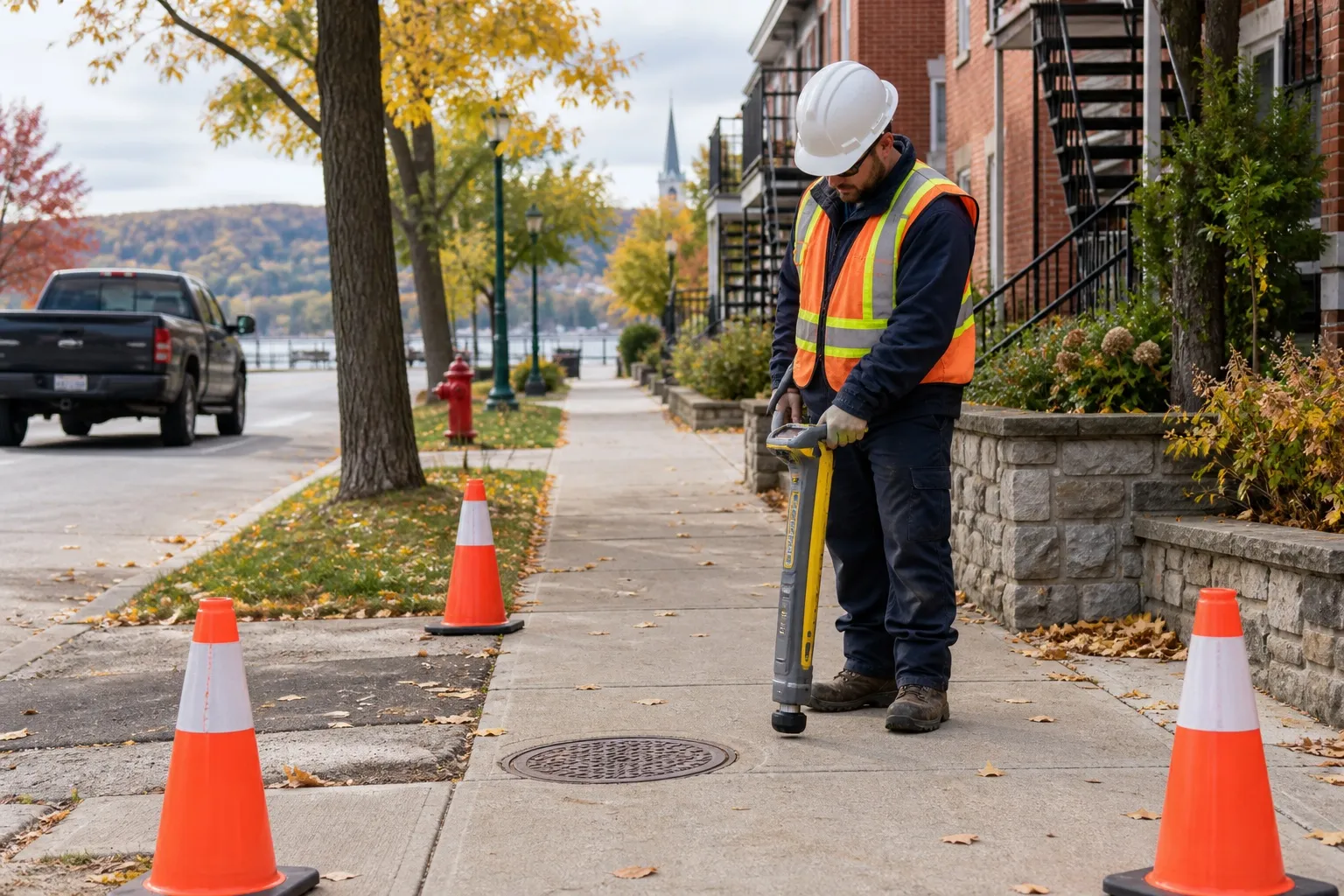
For these private portions, a specialized firm takes over with methods such as ground penetrating radar and electromagnetic locating. This is the case for locating underground pipes or for locating buried cables without reliable plans.
So remember the essentials. Using Info-Excavation remains a mandatory, free and essential step, but it does not replace private locating when the property has buried installations beyond the connection point.
- Members' public utilities up to the property line : Private service connections after the meter
- Declared electricity, gas and telecommunications : Cables to a garage, shed or pool
- Municipal utilities of member cities : Landscape lighting, wells, septic tanks, drains
- Free locating in the work area : Utilities of non-member municipalities
Conclusion
Info-Excavation plays a central role in damage prevention in Quebec. By centralizing requests and mobilizing its member utility owners, the organization protects the major buried utilities free of charge and secures a large share of job sites. Its limit is clear: it stops at the property line and at registered members. Before digging, always have the private portion of your property checked by an underground locating specialist so you can excavate with peace of mind.
Frequently asked questions
What is Info-Excavation and why is the service free?
Info-Excavation is the non-profit organization that acts as the locate request centre in Quebec. Funded by its member utility owners, it offers its service free of charge to anyone who needs to dig. Its goal is to prevent strikes on buried infrastructure, accidents and service interruptions. Free access encourages everyone to make a request before each excavation, regardless of the size of the planned job.
How long do you have to wait after a locate request?
After the request is submitted, member utility owners generally have three business days to mark their infrastructure or confirm there is none. You must therefore allow at least four business days before work begins, counting the day of the request. Always wait for all responses before digging, because a single unlocated utility can be enough to cause a serious accident.
Does Info-Excavation locate private utilities on my property?
No. The service covers only the buried utilities of member owners, such as the major public electricity, gas and telecommunications networks, and only up to the property line. Private installations after the meter, such as a cable to a garage, a landscape lighting system, a pool line or a drain, are not located. A specialized locating firm must then take over.
Is a locate request enough before excavating in Quebec?
A locate request is a mandatory and free step, but it is not always enough to secure a job site. It reveals neither private utilities nor installations whose owner is not a member of the locate request centre. For a residential or commercial property with private pipes, it is wise to complete the process with professional locating before any digging.