Info-Excavation and private locating do not cover the same portion of a property. To prepare an excavation, a trench or drilling, you therefore need to check public utilities, then have the service connections and structures on the private side of the property located.
The distinction is simple: Info-Excavation locates public utilities free of charge up to your property line. Service connections, site conduits, cables between buildings, drains and buried tanks must then be searched for with a method suited to the site.
What Info-Excavation covers
An Info-Excavation request concerns public utilities registered by utility owners, such as electricity, gas, telecommunications or certain municipal networks. It is a preparation step for the public portion of the job, but it does not replace the survey of private installations.
Before digging, make the request for the public right-of-way and the portion covered by participating utilities. Keep the information you receive and pass it on with your plans or site details when you request private locating.
- Public utilities up to your property line
- Utilities registered by participating owners
- Useful reference points for preparing the public portion of the work
What remains to be located on private property
The private portion generally begins after the property line. It can include the service line between the meter and the building, a cable to a garage or pool, a water line, a drain, a private gas line, an old conduit or an abandoned tank. These elements are not necessarily shown on the available plans.
A property may also have been altered over the course of renovations. An out-of-service utility, an old foundation or a pipe left in place remains a relevant target when it lies within the area to be excavated. Underground utility locating can cover several types of utilities in the same survey.
Cables between buildings and private conduits
A cable that powers a garage, shed, pool, lamp post or second building often runs through a private area. A cable may be live, de-energized or placed in a sheath that does not respond the same way to instruments. The survey must therefore combine the available approaches rather than assume that a single signal will be enough.
Underground cable locating is used to trace electrical and telecommunication cables before fencing, excavating or installing a structure. When several utilities are within the same footprint, request a wider survey to avoid moving the risk a few metres further along.
Drains and pipes without a reliable plan
French drains, drainage pipes, storm sewers and private water lines can be difficult to follow when they are not metallic or have no tracer wire. Conduit locating then relies on ground-penetrating radar, a sonde when access allows and visible signs on the site.
For a trench, a drain repair or landscaping, indicate the known manholes, outlets, meters and access points. Conduit locating can supplement the information from Info-Excavation and transfer the traced routes onto a PDF plan.
Buried tanks and abandoned structures
An old oil tank, a cistern or a buried structure is on the private side and is not part of a standard request for public utilities. An older house, an old heating installation or a backfilled area can justify a search before a sale, an excavation or an extension.
The underground tank detection service is aimed at searching for buried structures and their piping within the accessible area. The result must distinguish what is located, what remains uncertain and the checks to plan before proceeding.
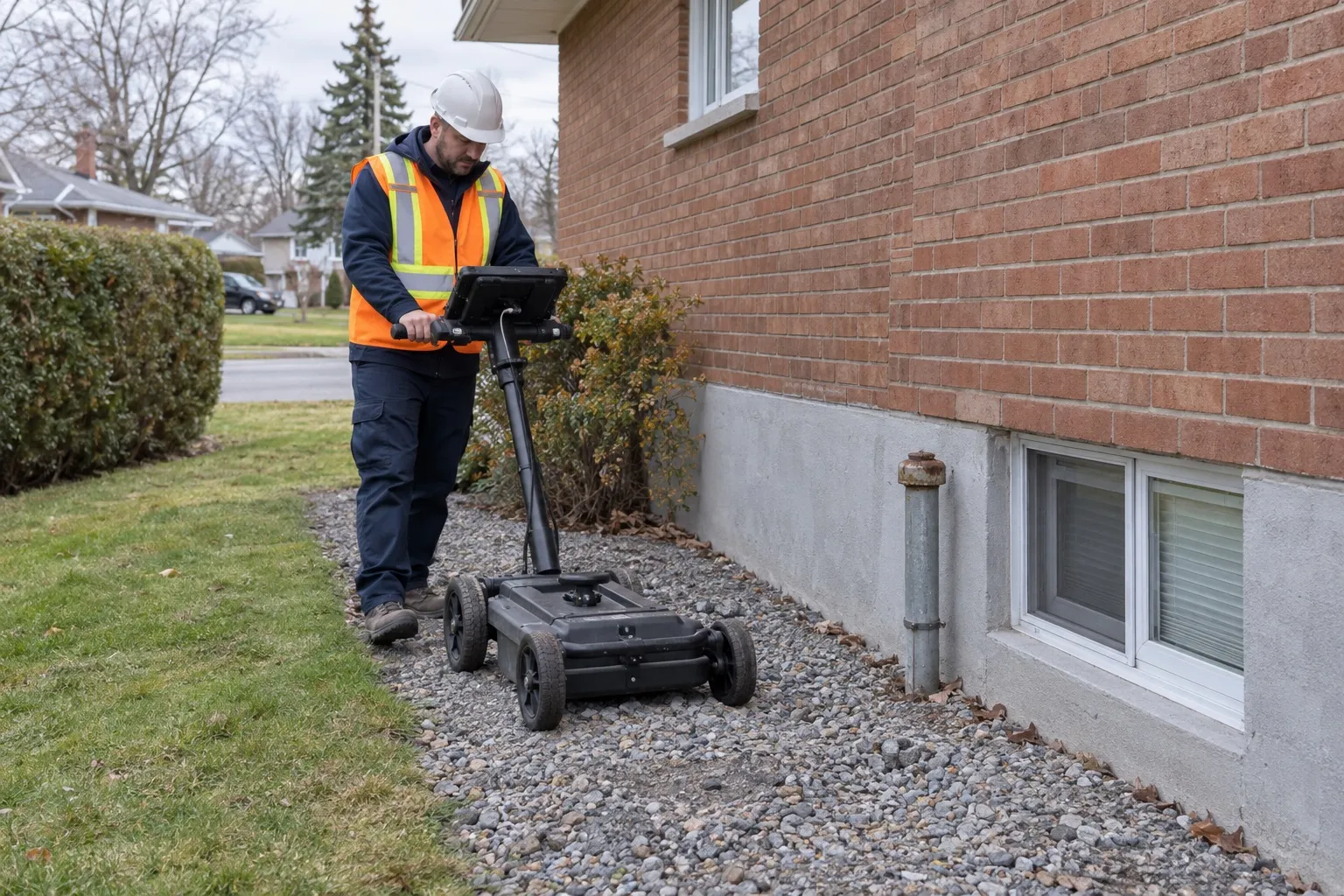
Ground-penetrating radar and radio detection, two complementary methods
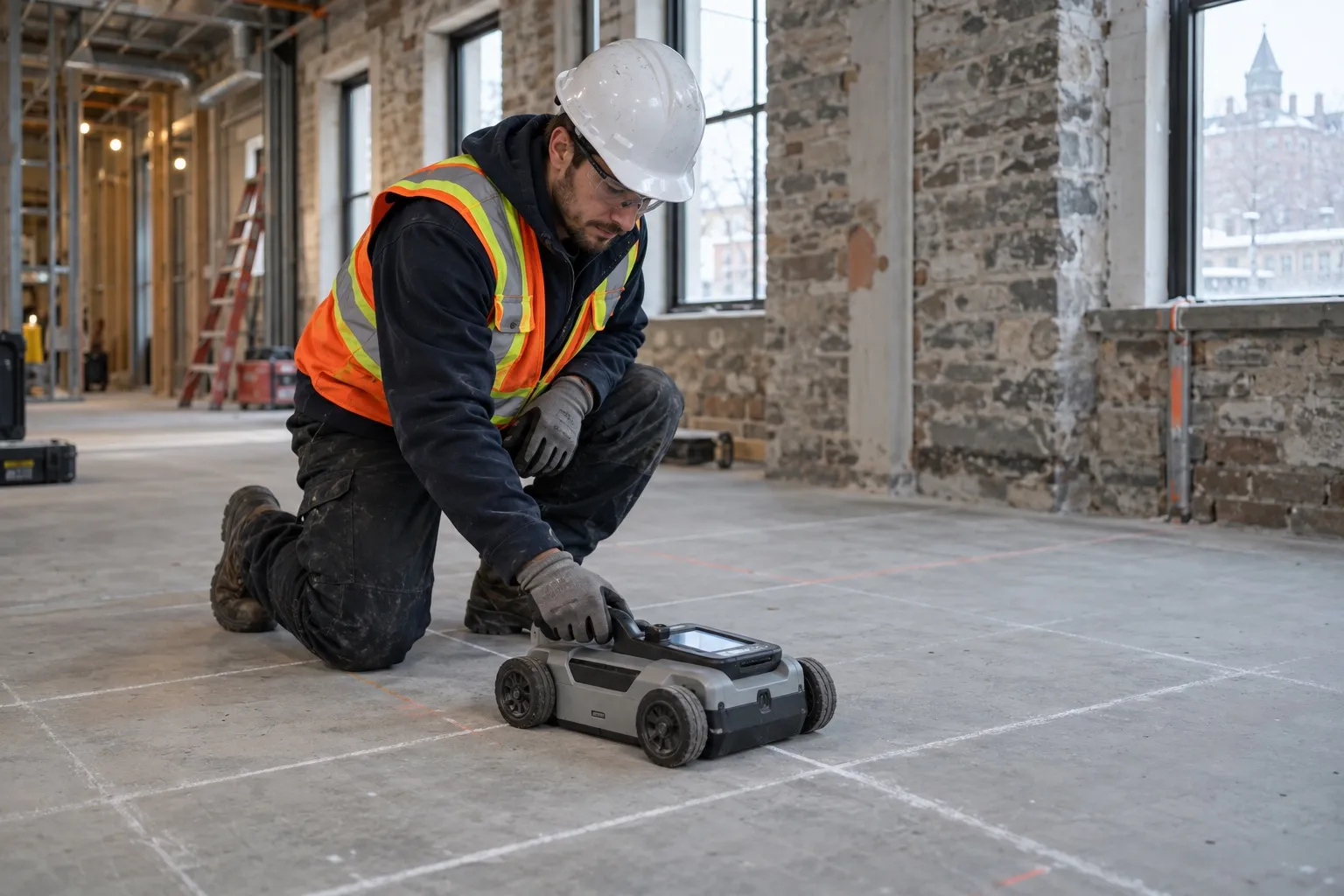
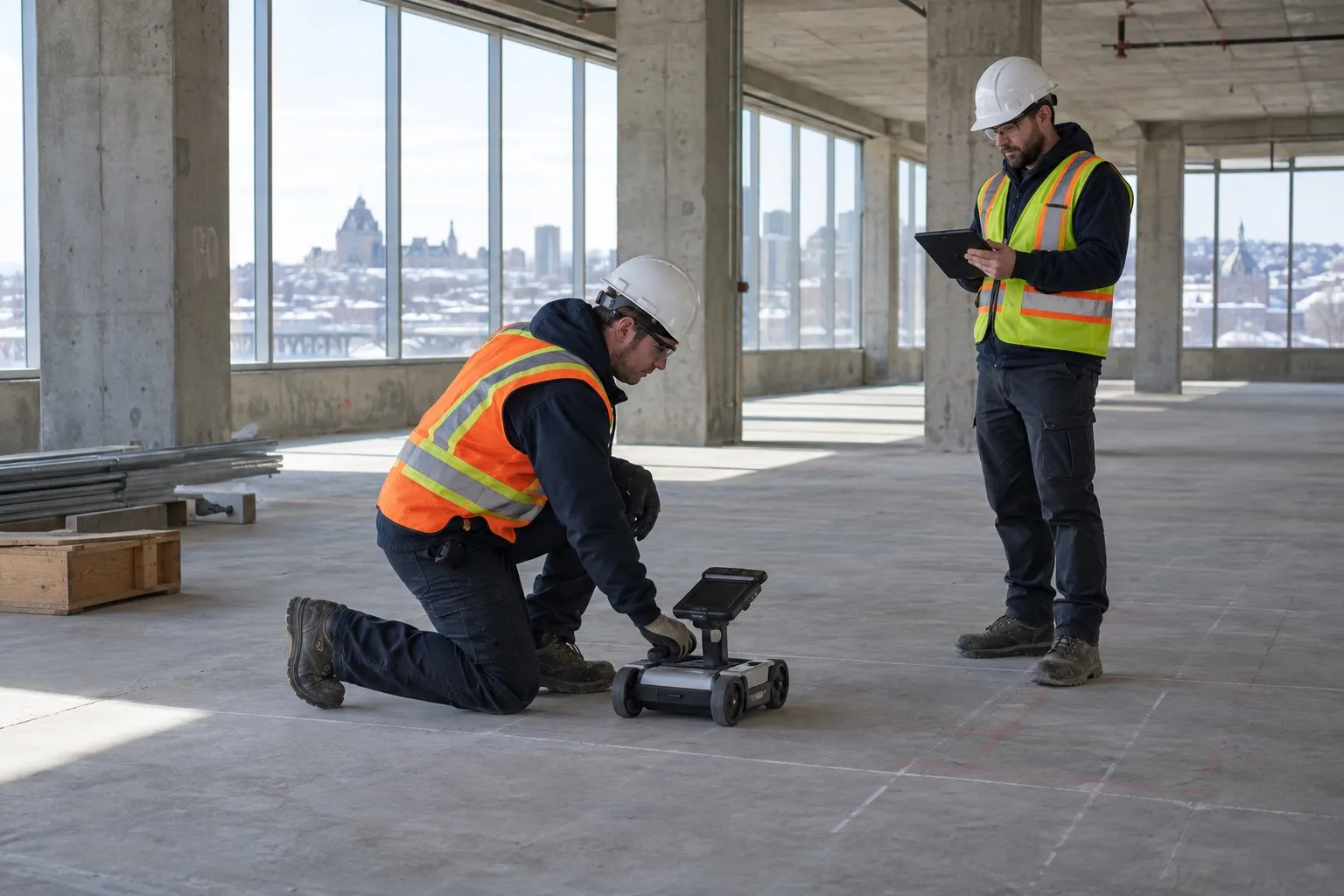
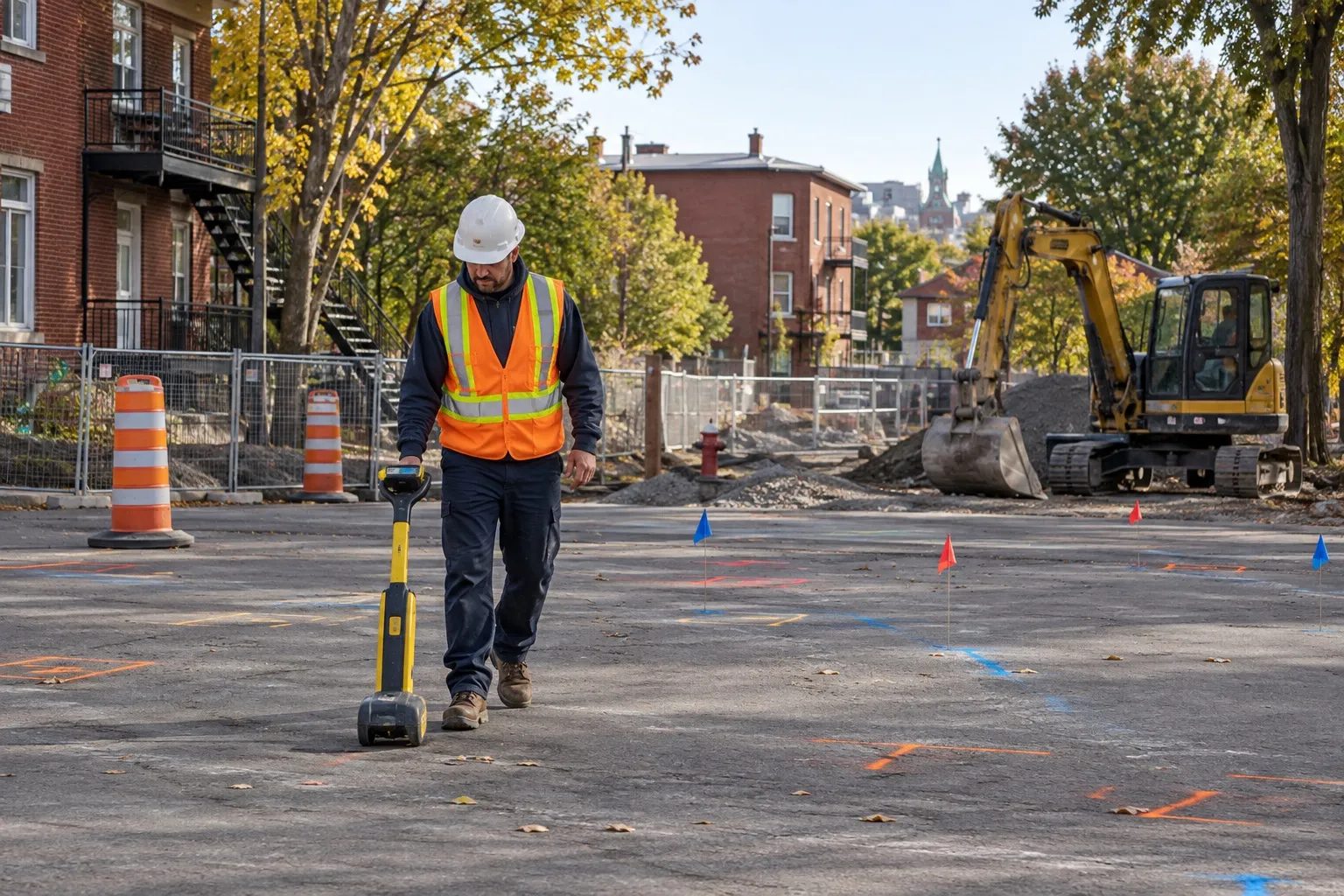
GSSI ground-penetrating radar scans the ground to detect interfaces, non-metallic conduits, voids and certain structures. Electromagnetic radio detection follows metallic utilities or conductors to which a signal can be applied. Results depend in particular on access, soil, depth and the type of utility.
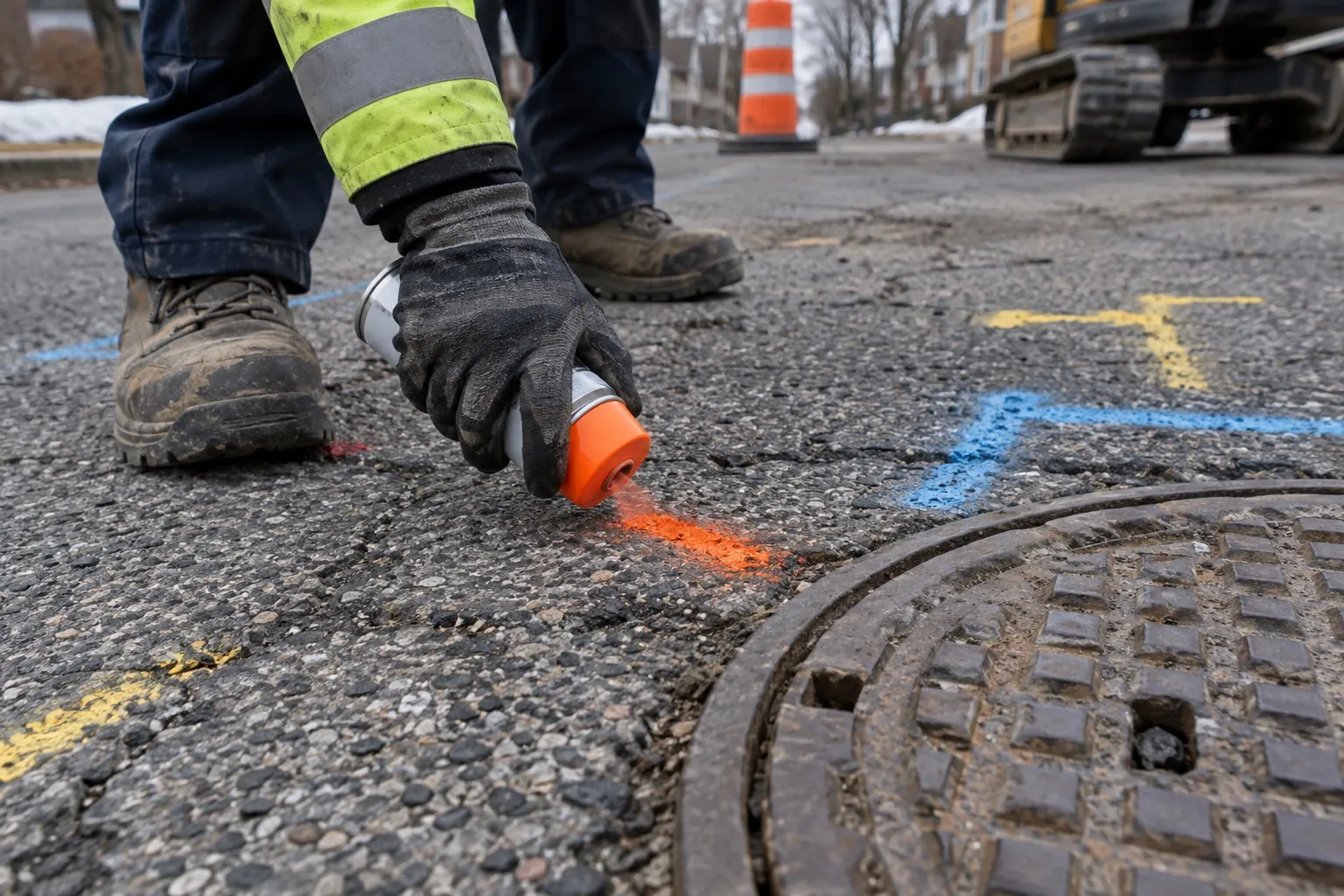
The technician cross-checks observations whenever possible, marks the routes on the ground according to the colour code in effect and indicates estimated depths in the report. A depth remains an estimate tied to site conditions, not a guarantee for mechanical excavation without precautions.
- Ground-penetrating radar for non-metallic conduits, voids and structures
- Radio detection for metallic utilities and accessible cables
- Ground marking and PDF plan to prepare the work
The right sequence before digging
Start by clearly describing the work area: width, length, planned depth and equipment used. Then make the Info-Excavation request for the public portion, gather the plans and locate the private installations that may cross the footprint. A quote request with the city, the planned work and known access points helps choose the appropriate level of survey.
On site, the utilities located are marked and transferred to a PDF report. Near an uncertain route or depth, plan a careful approach method, such as hand digging or hydro-excavation, according to the recommendations applicable to the job. Info-Excavation’s damage prevention guidelines set out the precautions to consider before excavation work.
Conclusion
Info-Excavation is a step for public utilities. Private locating takes over on your property for service connections, cables, drains, pipes, tanks and structures that are not covered. To prepare your job, request a quote indicating the area, the type of work and the utilities already known.
To go further, see the excavation safety and method guidelines and the requirements that apply to RBQ excavation work.
Frequently asked questions
Is Info-Excavation enough before digging on private property?
No. Info-Excavation covers public utilities up to the property line. Service connections, cables, pipes, drains and other private structures must be located separately within the work area before digging.
Who locates a cable between the house and the garage?
This cable is usually on the private portion of the property. Private locating can trace its route and estimated depth with radio detection, supplemented when needed by ground-penetrating radar when the sheath or cable does not produce a usable signal.
Can a private drain be found without a plan?
Often, the search combines known access points, a sonde when access is possible and ground-penetrating radar. The quality of the result depends on the material, the soil, the depth and the condition of the drain. The report must specify the limits observed.
Should I look for an old tank before excavating?
An old heating installation or a backfilled area can justify searching for a tank and piping before an excavation or a transaction. The area to be covered and the available signs are used to define the survey.