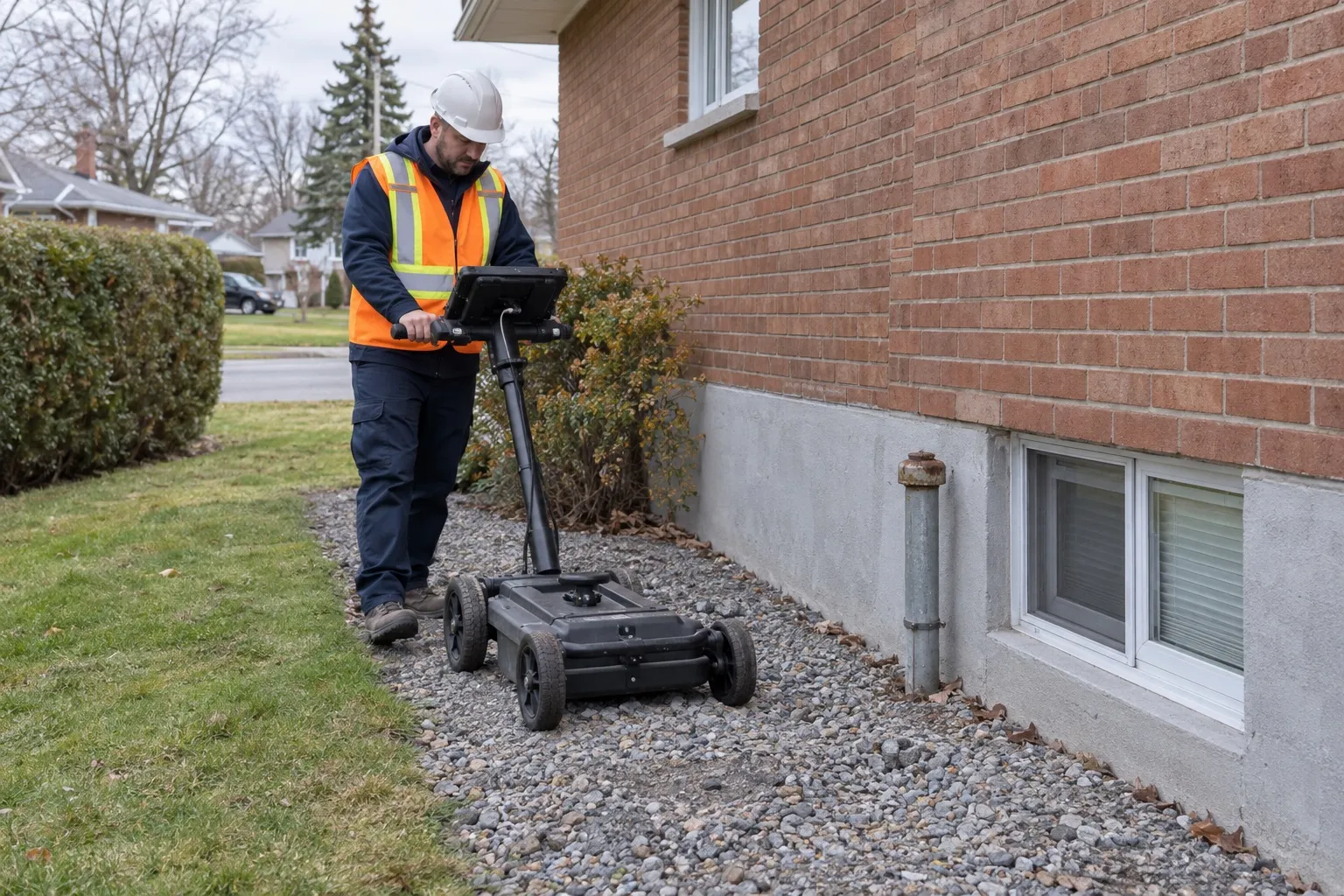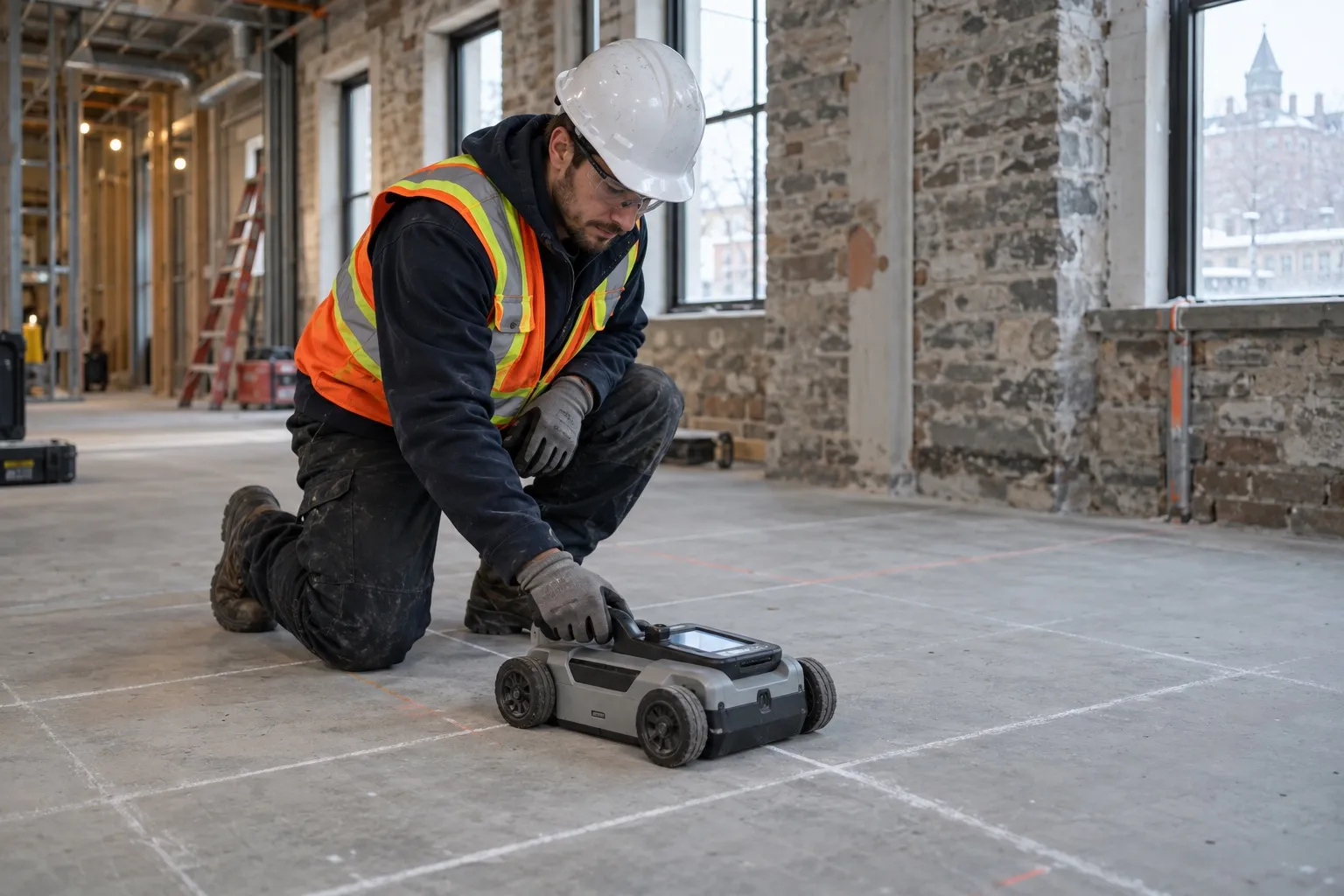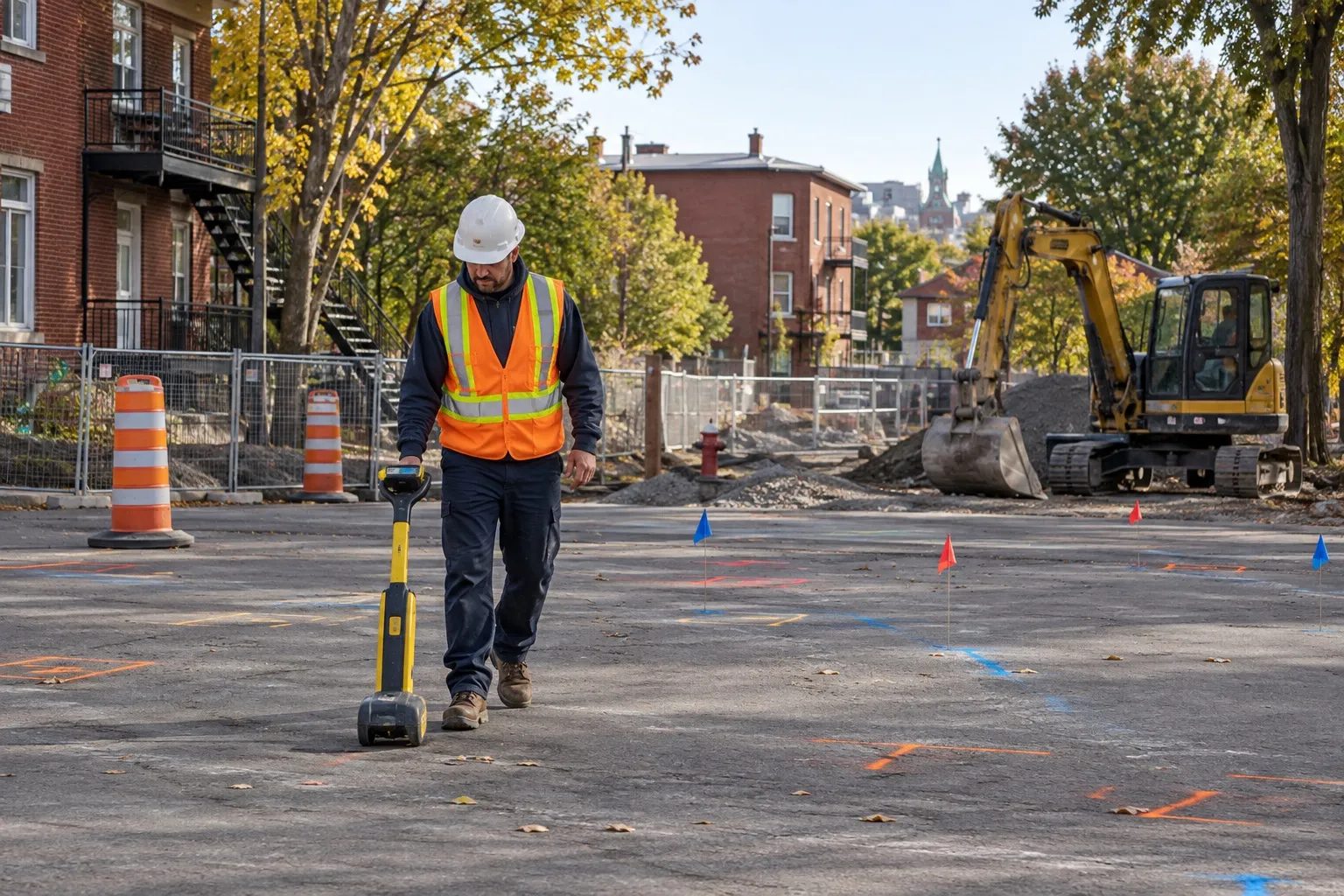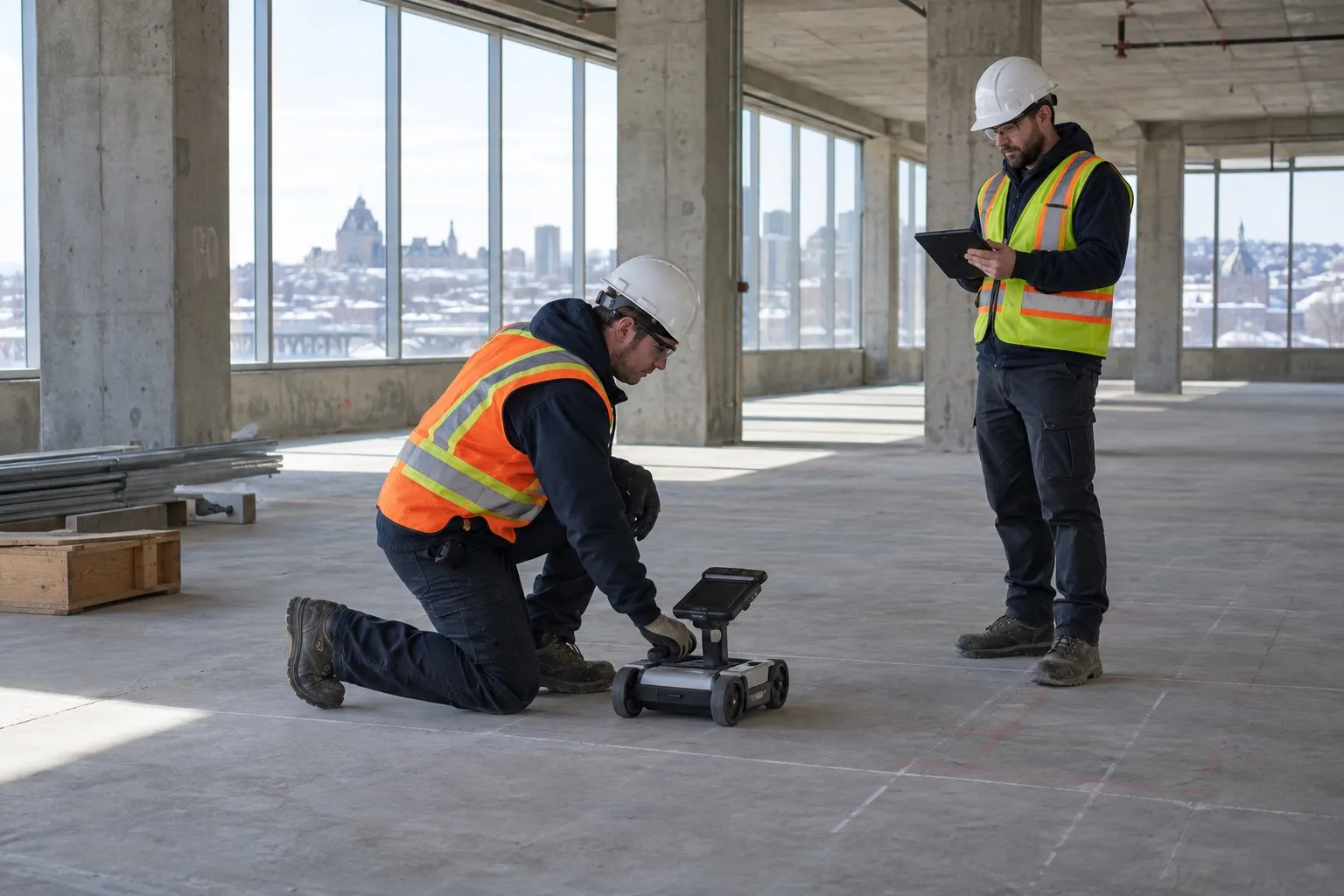
Three very different tasks end up with the same question: what is behind what I am about to open? Coring a slab, digging a trench and driving piles involve neither the same risks nor the same verification methods, but they share an order of operations.
This guide describes that order. It builds on our concrete scanning and underground utility locating pages, each of which details its method.
Three situations, three footprints
The first decision is not technical, it is geometric: how far do you need to look? Coring targets a few specific points. A trench or directional drilling follows a corridor and crosses whatever runs across it. Piles or foundations affect an entire footprint, often several metres deep.
Defining this footprint before calling anyone avoids two opposite mistakes: having too little checked, and paying for coverage that will not be used.

The order of checks
Public utilities come first, because the request is free and it defines the rest of the work.
- Info-Excavation request for public utilities up to the property line
- Private survey of the property portion, matched to the defined footprint
- Marking on the ground or on the surface to be drilled, as applicable
- Opening, keeping the markings visible throughout preparation
In concrete and in soil, two different readings
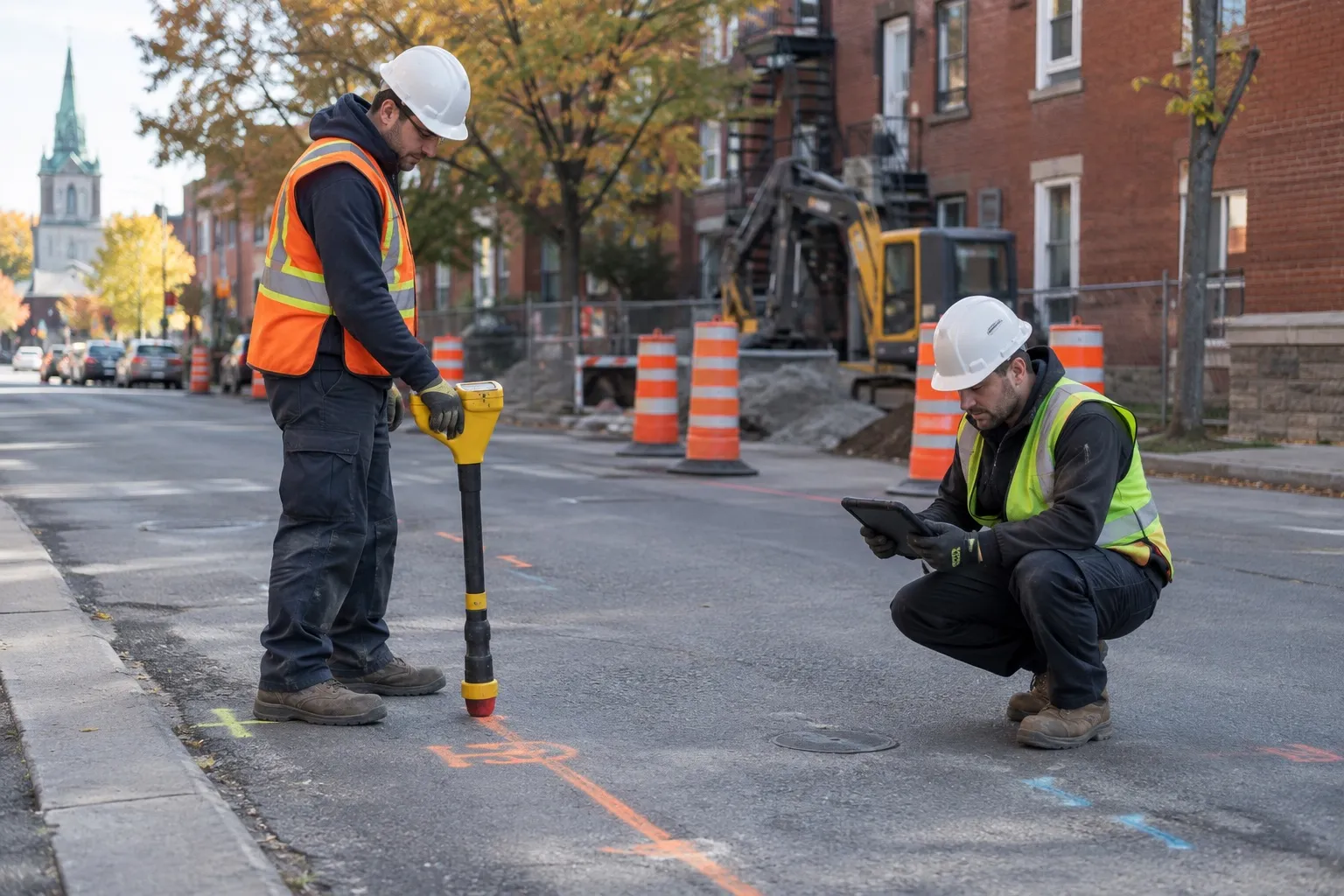
In a slab, wall or beam, the issue is what the structure contains: rebar, conduits, post-tension cables, voids. In soil, the issue is what runs below and at what depth, with two technologies that complement each other because neither is enough on its own.
This difference has a practical consequence. A job that involves both a slab to drill and a trench to dig requires both readings, ideally in the same visit rather than in two visits far apart.
When the survey says “I don’t know”
This is the most useful part of a good report, and the one most often misused. An area flagged as uncertain is not a failure of the survey: it is information that should change the way you drill, not a box to tick before carrying on as planned.
In soil, the usual answer is to expose differently: hand digging or hydro-excavation when approaching the line. In concrete, it is often even simpler, since moving the opening slightly is enough to get out of the doubtful area.
What the survey does not decide
A survey tells you what is there. It does not say whether the opening is acceptable for the structure, or whether the chosen method is suitable. That responsibility remains with the site crew and with the engineer when their opinion is required.
A visit is prepared the same way in every case: how a visit works describes the steps, and a quote can be requested with the footprint and the type of work.