A real estate transaction sometimes stalls on a simple question: is there still an oil tank under the property? Houses built between the 1950s and the 1980s were often heated with oil, and not every installation was removed at the time of conversion.
This guide explains what a search can establish before buying or selling, and above all where its conclusion stops. It complements our underground tank detection page, which describes the method in detail.
Signs that warrant a search
Before any survey, a walk around the property and the basement helps guide the search. Traces of an old installation can often be read on the surface.
- A fill pipe or vent along a wall
- A visible line trench toward the basement
- A ground depression in one specific spot
- An old burner or fittings left in place
What the survey establishes
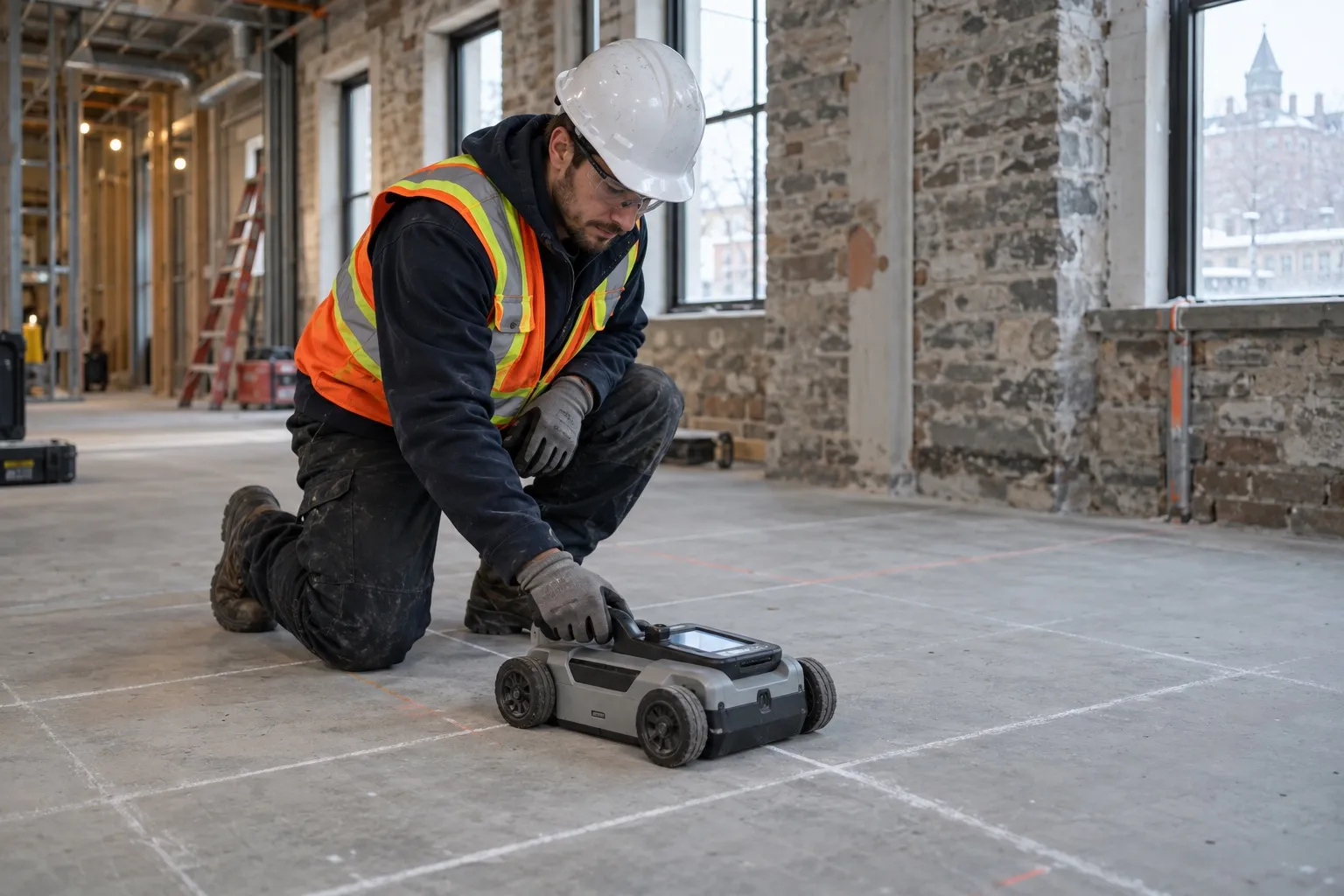
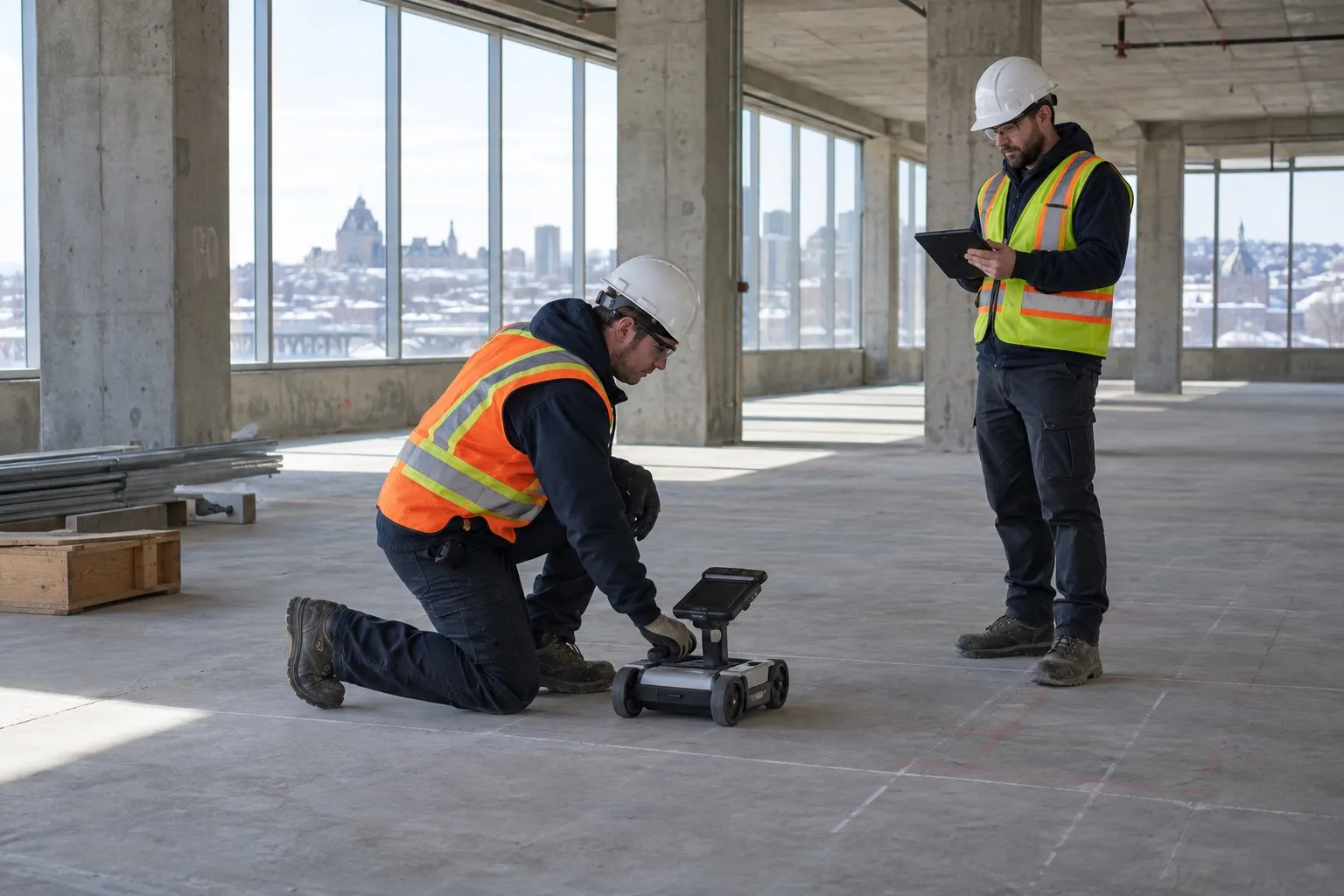
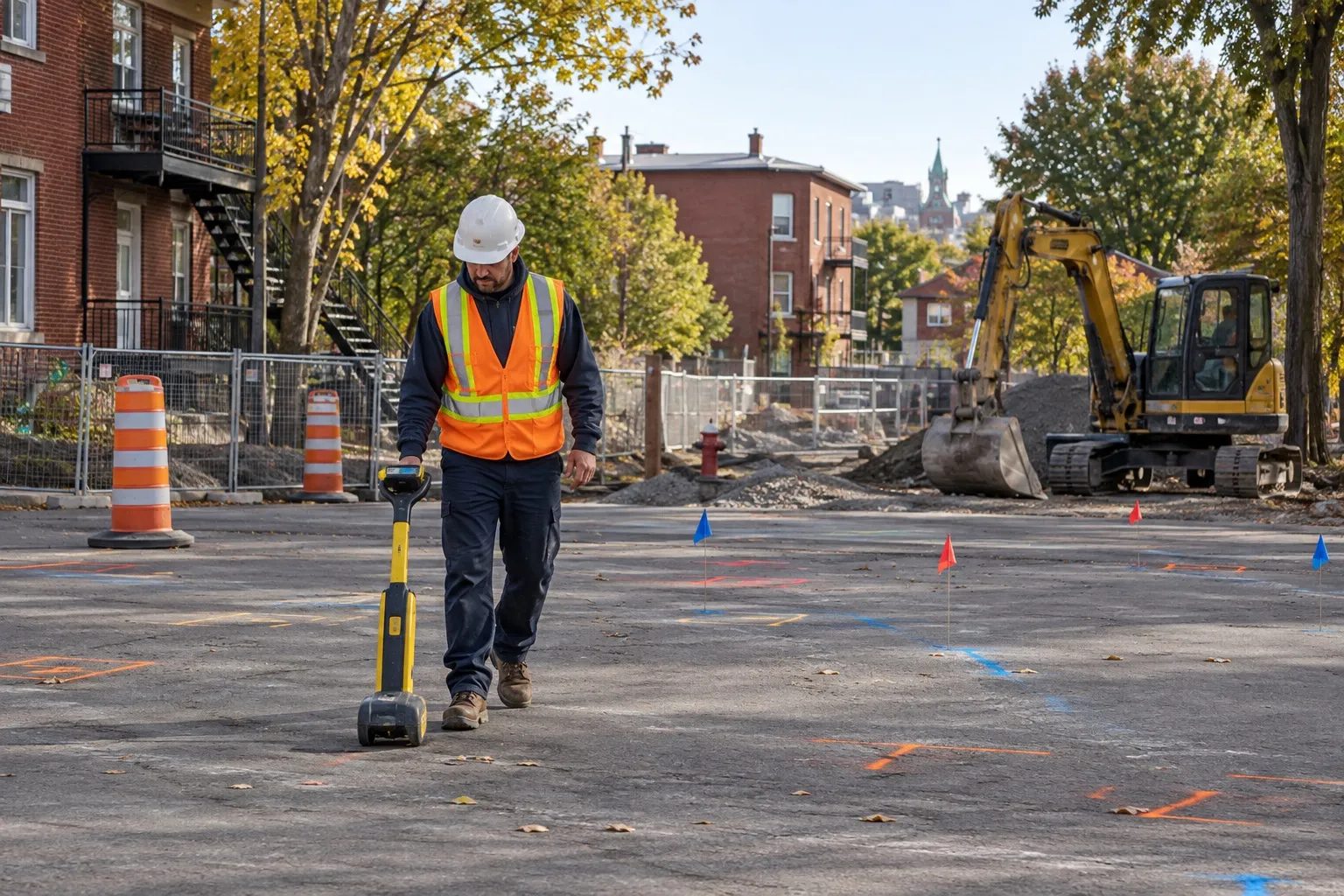
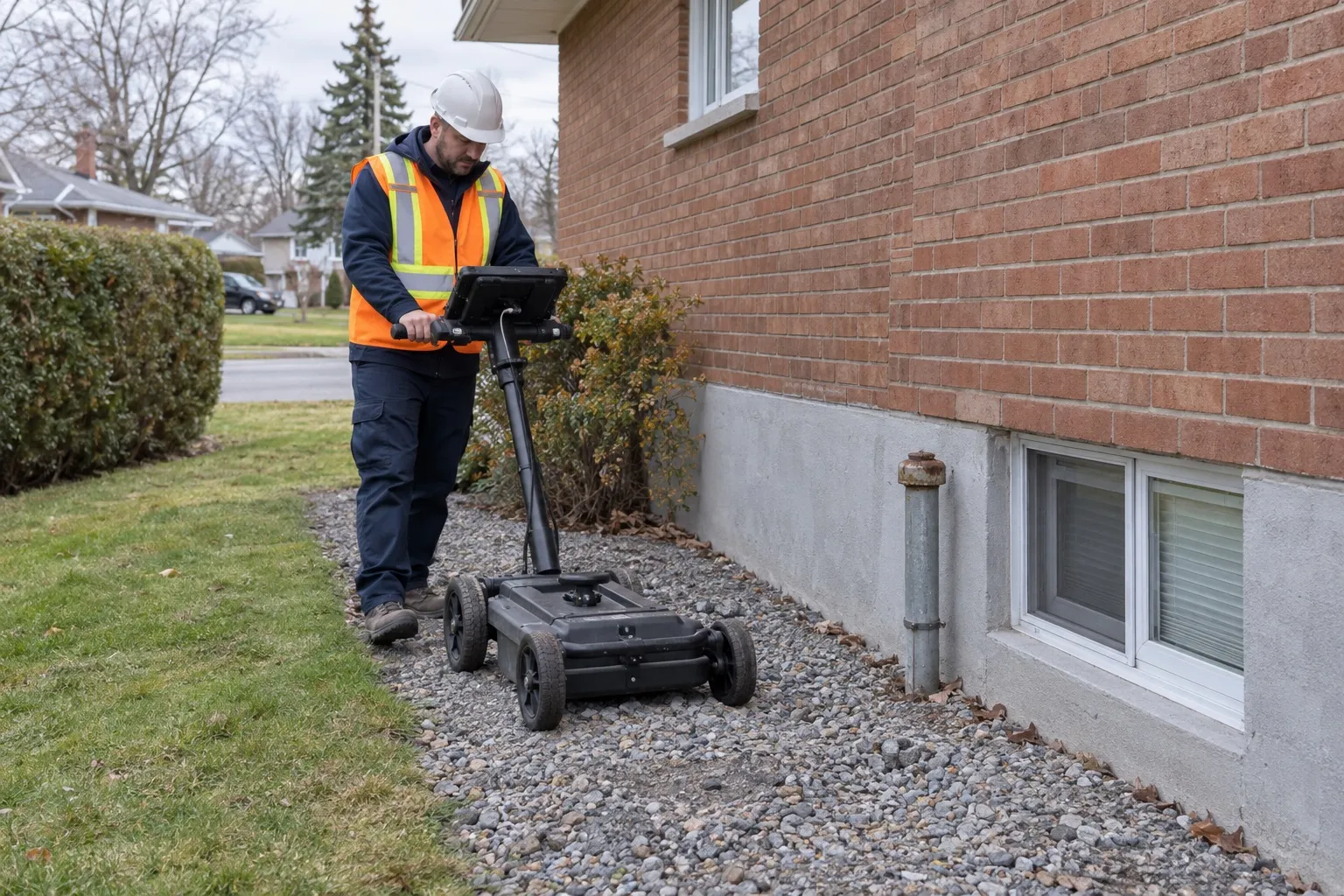
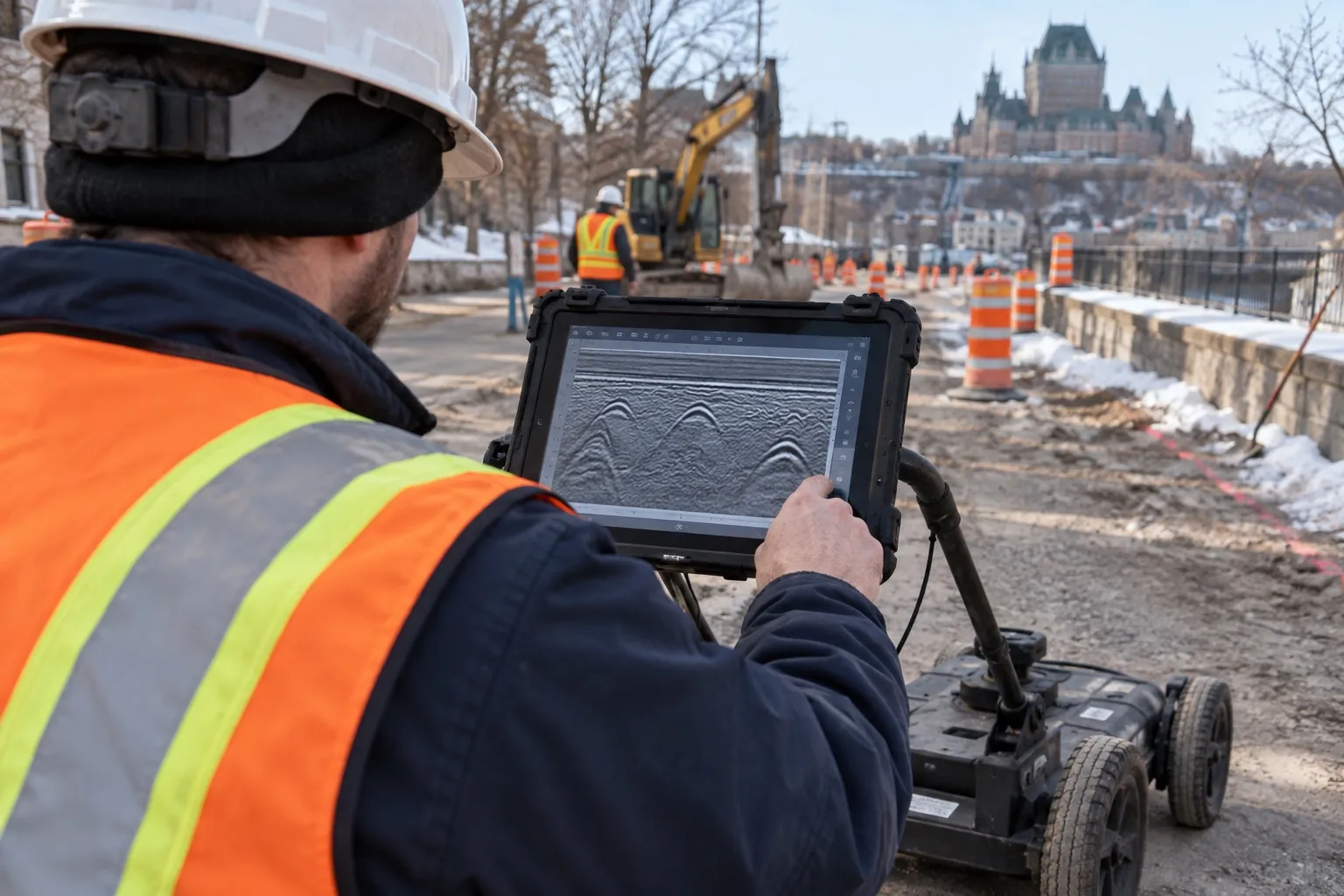
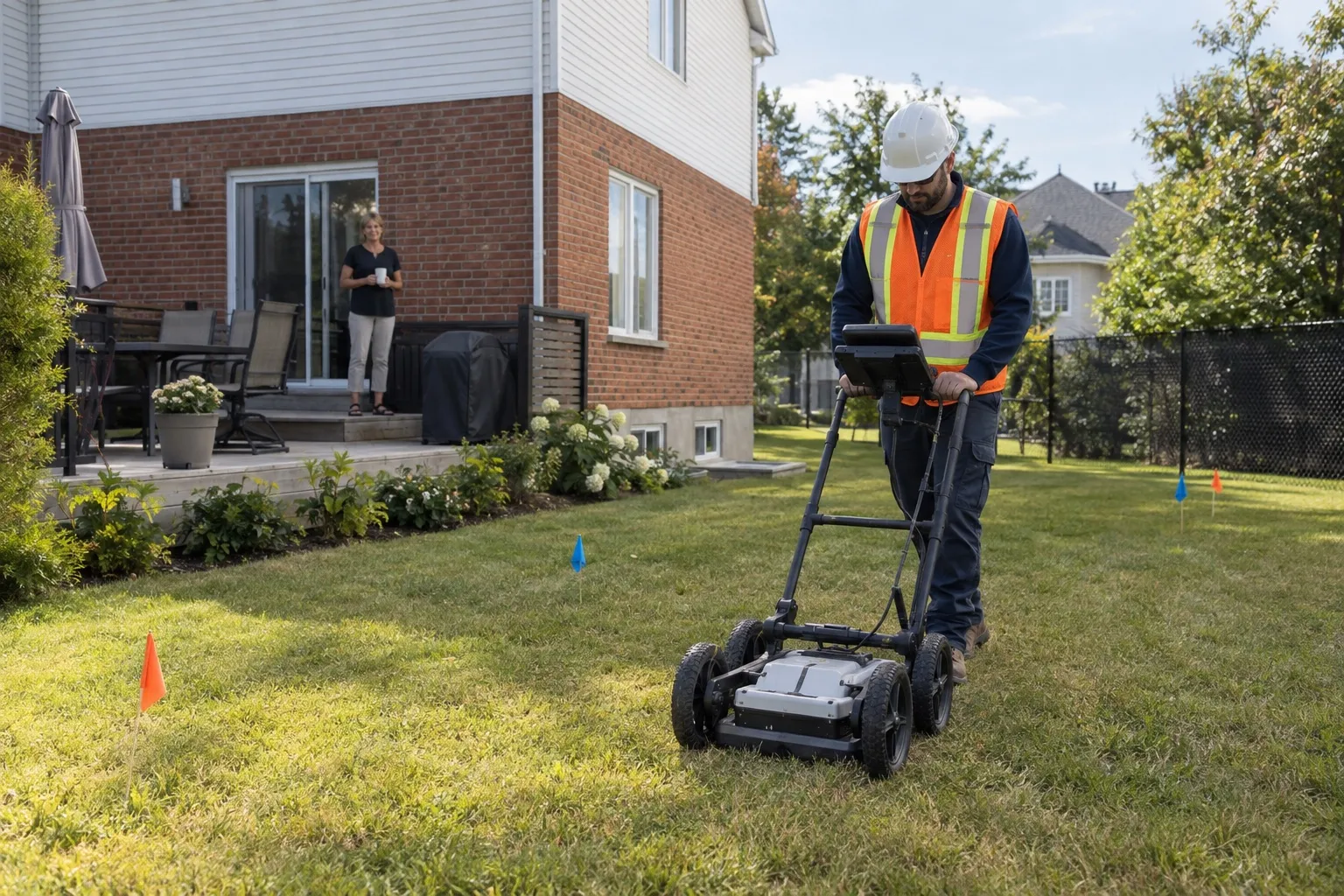
The search combines a ground-penetrating radar scan of the likely area, with a tight grid around the signs, and radio detection to confirm a metal line between the tank and the house. A consistent target is then marked on the ground, with an estimated depth of the top and approximate dimensions.
The result is used to decide what comes next: request a characterization, plan a removal, or document the file for the buyer and the insurer.
What the survey does not establish
This is the most commonly misunderstood point. Ground-penetrating radar maps what lies below the surface; it says nothing about the condition of the metal, its tightness or its contents. Roots, fill, asphalt, nearby structures and wet soil can also make interpretation less clear.
A conclusion about contamination is a matter for a qualified professional, not a geophysical survey. Be wary of any claim broader than what the method allows.
Preparing your request
To scope the search, provide the address, the year of construction if you know it and the reason for the request. If other utilities need to be located during the same visit, mention it: the survey can cover the other buried utilities on the property during the same visit.
The full sequence of a visit is described on the how a visit works page. For a price, request a quote with the city and the type of work.