Info excavation Quebec relies on two complementary steps. First, a free locate request with Info-Excavation identifies the members' public utilities up to the property line. Then, a private ground penetrating radar survey locates private pipes and cables, which is essential in the older areas and shallow bedrock of the capital.
Digging in Quebec City is nothing like digging in a new suburb. Between the century-old foundations of Old Quebec, bedrock that reaches the surface and utilities buried for decades, a well-run info excavation Quebec process makes the difference between a smooth job site and a costly strike.
This guide explains how to combine the mandatory public request with the private survey, so that every shovelful is based on a reliable picture of the subsurface.
Why info excavation Quebec calls for a tailored approach
The national capital combines several features that make locating more delicate than elsewhere. Utility routes are often old, densely layered and rarely documented to the centimetre.
Ignoring these realities means risking cutting a cable, puncturing a water line or weakening a foundation. The difference between private utilities and Info-Excavation then becomes a concrete issue in the field.
Older areas and incomplete plans
In Old Quebec and the central neighbourhoods, many utilities were installed well before current standards. Some plans cannot be found, and others no longer match reality after decades of repairs.
The result: the official markings from the major owners tell only part of the story. Private service connections, old water pipes and rerouted cables often remain invisible on paper.
Shallow bedrock that complicates locating
In Quebec City, bedrock is frequently close to the surface. Older utilities were therefore sometimes laid at shallow depths or routed around the rock, which produces unpredictable paths.
This reality also influences the choice of method. A ground penetrating radar survey helps distinguish a pipe from a rock fracture and estimate the actual depth before bringing in an excavator.
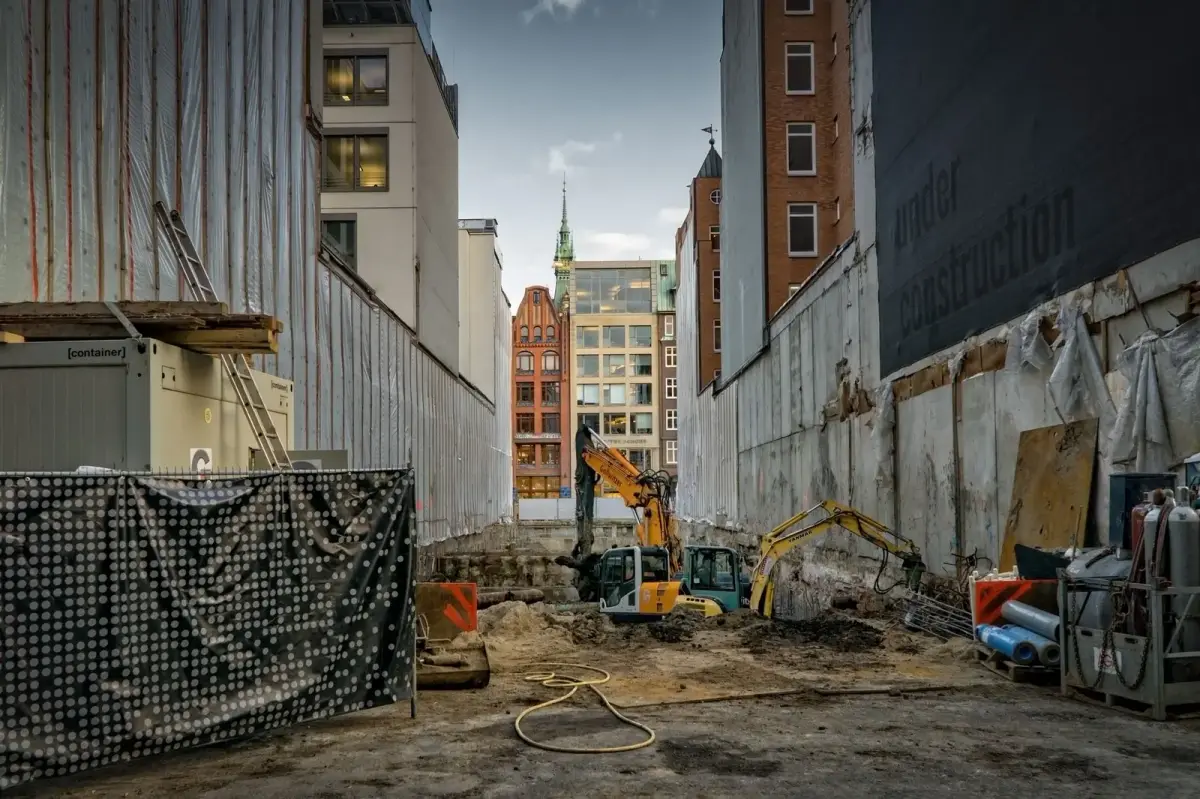
What Info-Excavation covers and what it leaves out
Info-Excavation is Quebec's damage prevention centre for underground infrastructure. It coordinates, free of charge, the locating of utilities owned by its member owners, such as gas, electricity and telecommunications.
This step is essential and governed by law. However, it stops at the property line and does not cover private installations buried on your land. That is precisely where many incidents occur in older areas.
- What is located : Member owners' utilities, Private pipes and cables on the property
- Coverage : Up to the property line, Anywhere on the site, including private areas
- Cost : Free service, Billed professional service
- Old or abandoned utilities : Often missing, Located based on their signature
- Best for : Mandatory preliminary step, Completing and securing the job site
Combining the public request and the private survey
Good practice is never to pit the two processes against each other, but to carry them out one after the other. The official request secures the public utilities; the private survey fills in the blind spots.
Here is the logical order to follow before digging in the capital:
This method follows the recommendations for locating infrastructure before digging, adapted here to the constraints of historic buildings.
Before starting a project in an older area, it is worth having your plans validated by a team specialized in underground locating. A professional survey confirms the actual location of utilities and spares you unexpected repairs.
- Submit a free locate request to Info-Excavation as soon as planning begins.
- Respect the minimum of four business days before work required by the Régie du bâtiment du Québec.
- Wait for a response from every owner present before any digging.
- Order a private survey for the parts of the property and the utilities not covered.
- Have everything brought together on a clear plan with estimated depths.
On-the-ground realities in the national capital
Every neighbourhood has its own challenges. A successful job takes into account the type of soil, the age of the area and the density of buried utilities.
Narrow streets and paving stones in Old Quebec
Excavations in the heritage core take place in tight spaces, often under paved or hardscaped surfaces. Locating underground pipes there requires a careful reading of signals, because utilities cross each other within a narrow width.
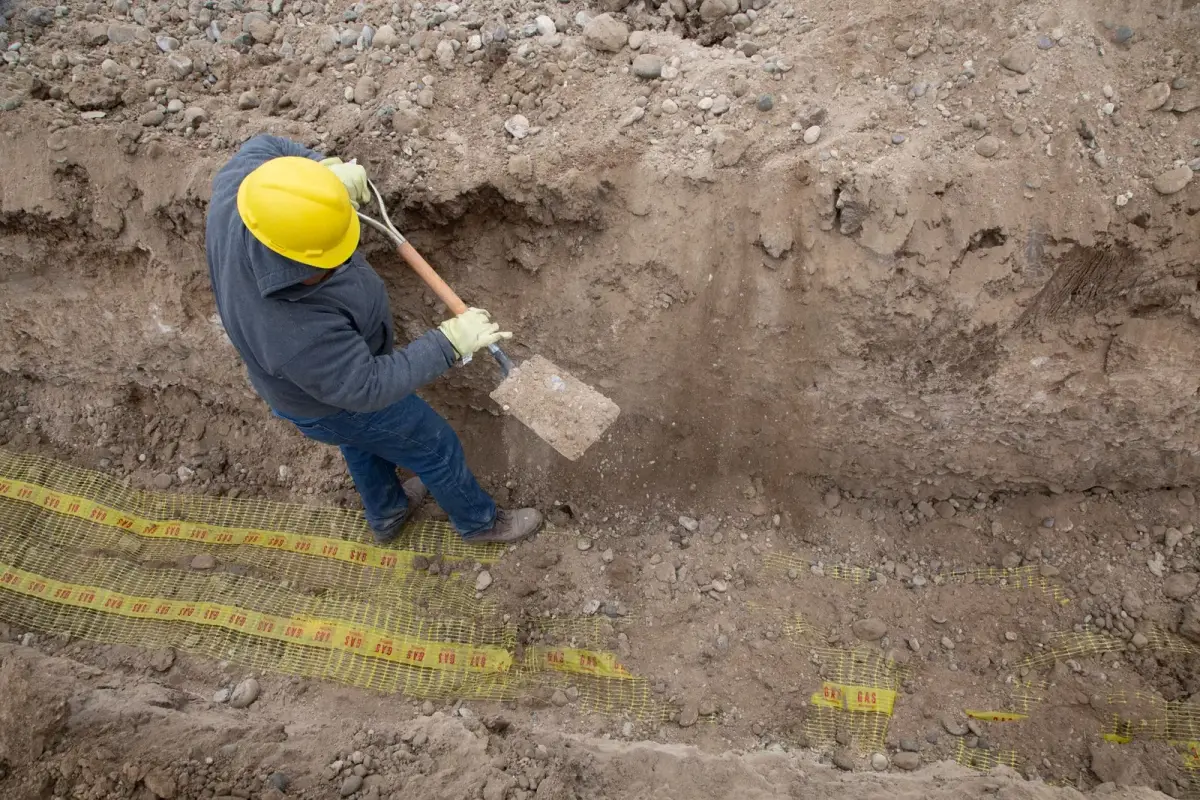
Private service connections and forgotten utilities
Landscape lighting, power to a shed, an old water line, an out-of-service tank: these private elements are not covered by the official markings. Locating them avoids unpleasant surprises, especially on properties that have been reworked several times over the years.
A survey process that inspires confidence
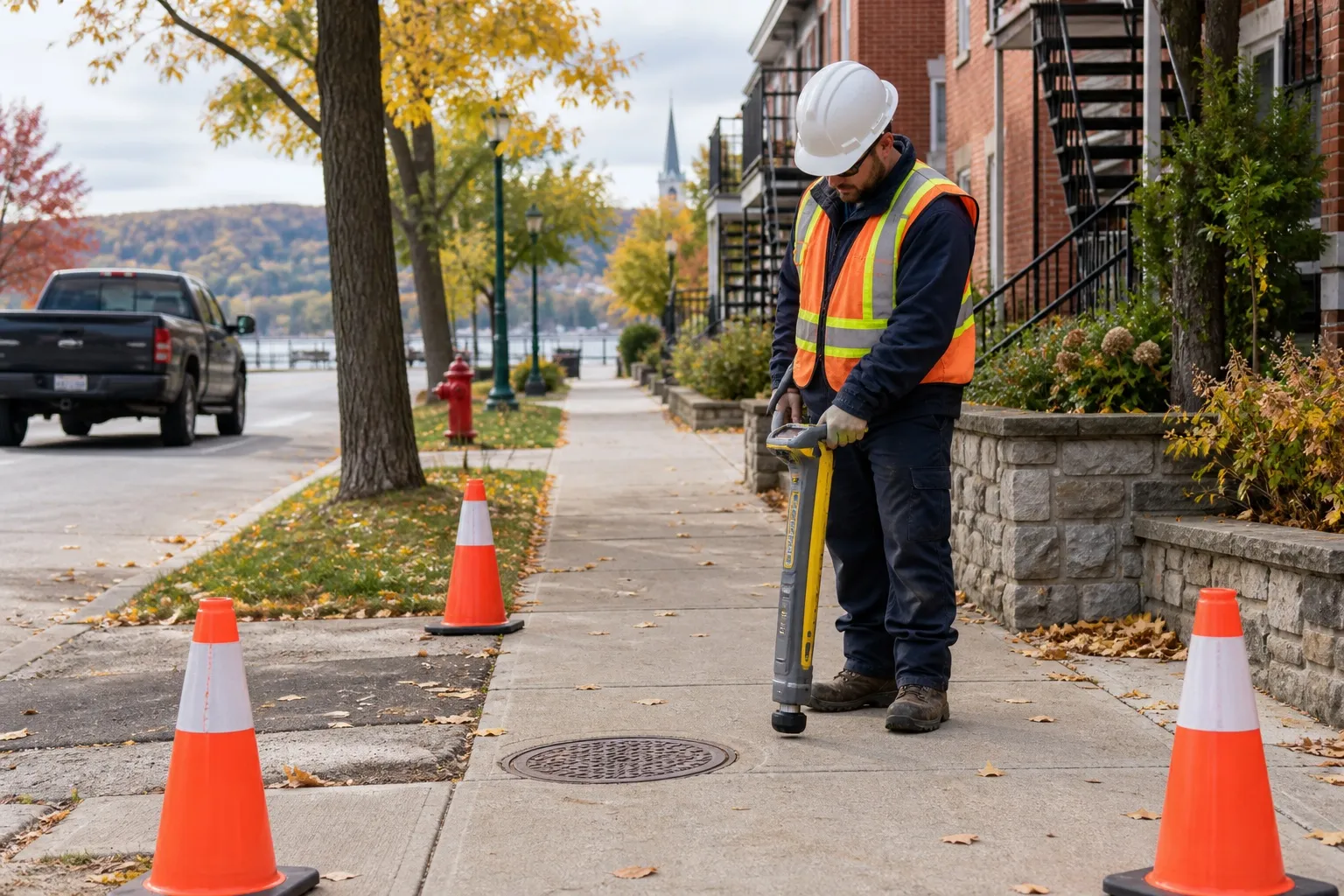
A reliable underground survey is not just a matter of passing a device over the ground. It combines two technologies: ground penetrating radar for non-metallic materials such as PVC or concrete, and electromagnetic locating for metallic utilities.
The technician then marks the routes on the ground using a colour code, notes the estimated depths and delivers a clear plan. This deliverable allows the contractor, the surveyor or the owner to plan the excavation with full knowledge of the situation. For a job site involving Quebec City's underground utilities, this rigour is what separates a controlled project from a risky gamble.
Conclusion
A solid info excavation Quebec process is never limited to a single step. It combines the free public request, which protects the members' utilities, with the private survey, which sheds light on everything the markings leave in the dark, especially in older areas with shallow bedrock.
To dig safely in the capital, always combine these two components, then request a quote from underground locating specialists before launching your project.
Frequently asked questions
What is the info excavation Quebec process before digging?
The info excavation Quebec process combines two checks. A free locate request with Info-Excavation has the members' public utilities marked, such as gas, electricity and telecommunications, up to the property line. A private ground penetrating radar survey then completes the picture by locating the pipes and cables that belong to the owner. In the capital, this combination protects older areas and utilities that have been buried for a long time.
Is Info-Excavation enough for a job site in Old Quebec?
Info-Excavation locates only the utilities of its member owners, up to the property line. In Old Quebec, a large share of installations are private, old or poorly documented, and therefore absent from these markings. A private survey then becomes essential to locate water lines, lighting cables and the remains of abandoned utilities. This step avoids unpleasant surprises under the paving stones and century-old foundations of the area.
How long before work should the request be made?
Quebec regulations require submitting the locate request at least four business days before work begins, and the request remains valid for up to one hundred and eighty days. You must wait for a response from every owner present before digging. For a private survey, also allow a few days to schedule the visit, carry out the locating and receive a complete plan before the first shovelful.
Does Quebec City's shallow bedrock change how utilities are located?
Yes. In several areas of the capital, bedrock lies close to the surface, which led older utilities to follow unusual routes, sometimes shallow or running around the rock. Ground penetrating radar helps distinguish a pipe from a rock fracture and estimate its actual depth. An experienced technician adjusts the settings to the soil, which clearly improves the reliability of locating before excavation.