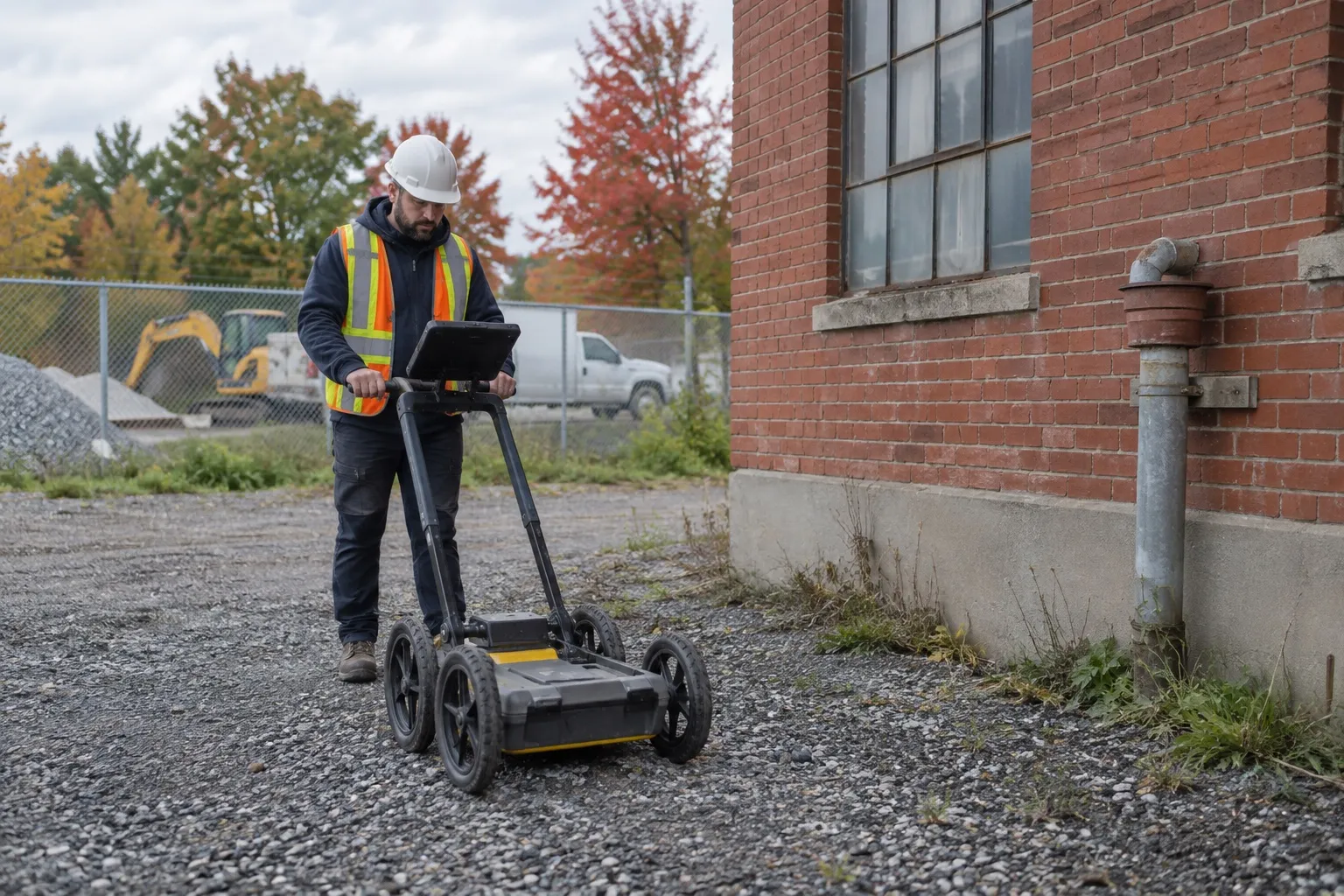
Ground penetrating radar (GPR) sends electromagnetic pulses into the ground and records the reflections caused by changes in material. It can locate conduits, tanks, voids and old foundations without digging, down to about one to three metres in Quebec soils, then mark their position on the ground.
Do you need to dig on a property without knowing what lies beneath? Ground penetrating radar (GPR) provides a reliable answer by revealing buried infrastructure before the first shovelful.
Every year, excavation work hits a forgotten conduit, tank or cable. The bill climbs quickly, not to mention the risks for people on site. Seeing underground before acting changes everything.
This article explains how this technology works, what it detects, how deep it reaches in Quebec soils and how it fits into a serious damage prevention approach.
How ground penetrating radar works
Ground penetrating radar is based on a simple principle. An antenna sends electromagnetic pulses into the ground, then picks up the waves that return to the surface.
Each time a wave encounters a change in material, part of its energy is reflected. The contrast between the soil and a pipe, a void or a slab creates a signature that the software displays in real time.
Unlike a simple metal detector, this technology responds to any material contrast, metallic or not. That is what allows it to locate a PVC or HDPE conduit, which is invisible to most other methods.
What ground penetrating radar can detect underground
On a Quebec property, a well-conducted survey brings a wide variety of buried targets to light:
For an old oil tank, for example, radar remains the tool of choice. Being able to locate an underground tank before a real estate transaction avoids costly unpleasant surprises.
- Non-metallic PVC or HDPE conduits
- Concrete structures, slabs and manholes
- Tanks and old oil tanks
- Voids, cavities and potential subsidence
- Old foundations and construction debris
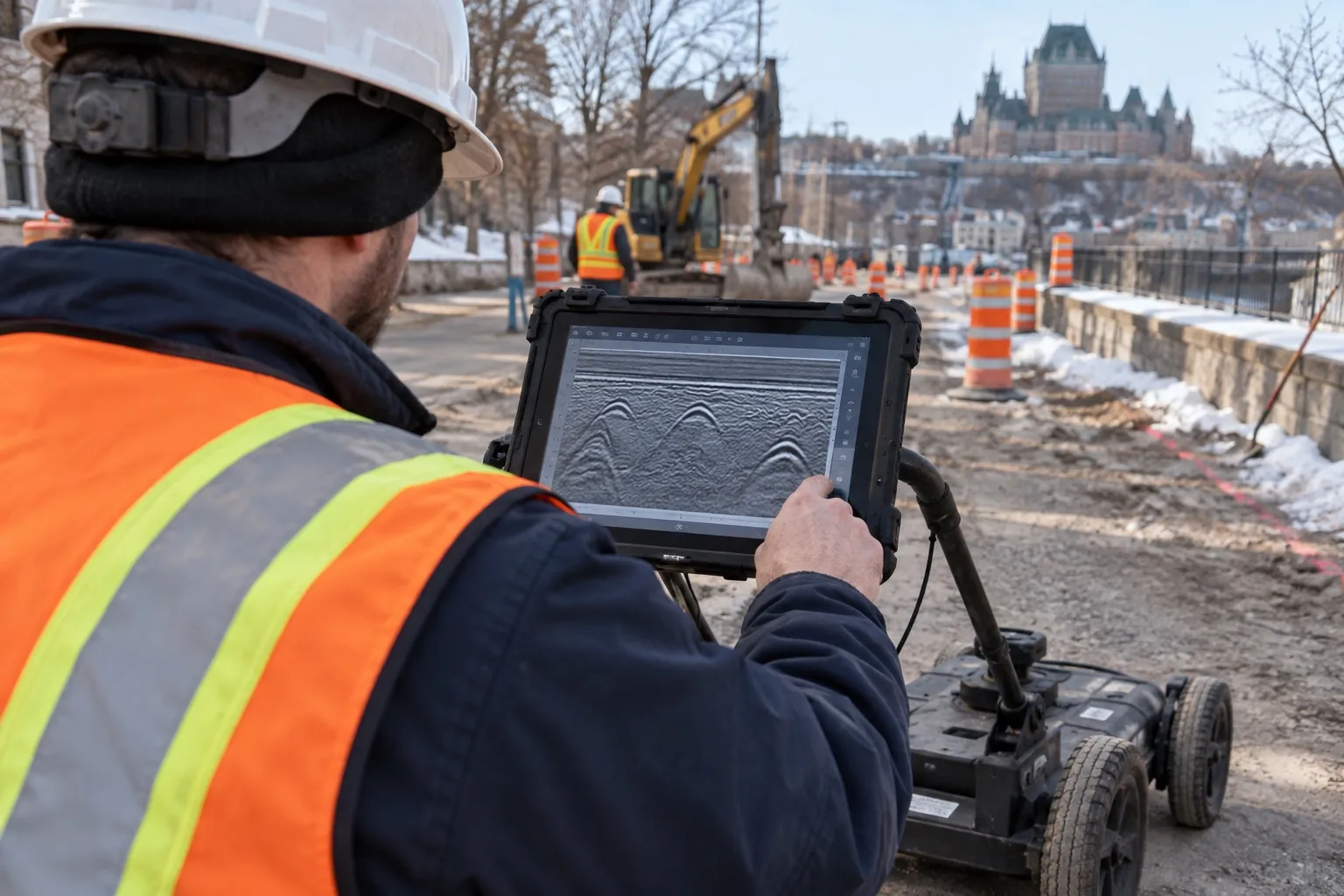
How deep ground penetrating radar reaches in Quebec soils
The range depends on the soil and the antenna. Under typical Quebec conditions, detection generally reaches one to three metres.
Dry, sandy soil lets the waves penetrate deeply. Conversely, water-saturated clay absorbs the signal and reduces the range. Antenna frequency also matters: the lower it is, the deeper it sees, but with less fine detail.
That is why the equipment is chosen for each site rather than following a single recipe. The same property may require two frequencies depending on the target being located.
Why combine ground penetrating radar and electromagnetic locating
No method sees everything. Ground penetrating radar excels with non-metallic materials and structures, while electromagnetic locating remains more direct for following a metallic cable or pipe.
In practice, the two techniques complement each other. Electromagnetic locating confirms the nature of a metallic target while the radar maps the rest. Combining the two reduces blind spots and makes the final plan more reliable.
Comparison of the two methods:
- Main targets: non-metallic materials, concrete, voids and tanks for ground penetrating radar (GPR); metallic cables and pipes for electromagnetic locating
- Principle: reflection of electromagnetic waves for ground penetrating radar; conducted electromagnetic field for electromagnetic locating
- Strength: ground penetrating radar sees any material contrast; electromagnetic locating precisely follows a metallic utility
- Limitation: reduced range in saturated clay for ground penetrating radar; electromagnetic locating is blind to plastic without a tracer wire
Ground penetrating radar or Info-Excavation, what is the difference
Before digging in Quebec, the obligations related to excavation work require checking for buried installations. It is a non-negotiable step for any job site.
To that end, making a locate request to Info-Excavation is free and expected before you begin.
However, this process covers the members' public utilities, up to the property line only. The private utilities on the property are not located.
That is where the radar survey takes over: it locates private cables, pipes and tanks that do not appear on any public plan. To fully understand the sequence, this guide on the steps before digging covers the topic.
Are you planning work and unsure what lies beneath your property? Request an assessment of your site before taking out the shovel.
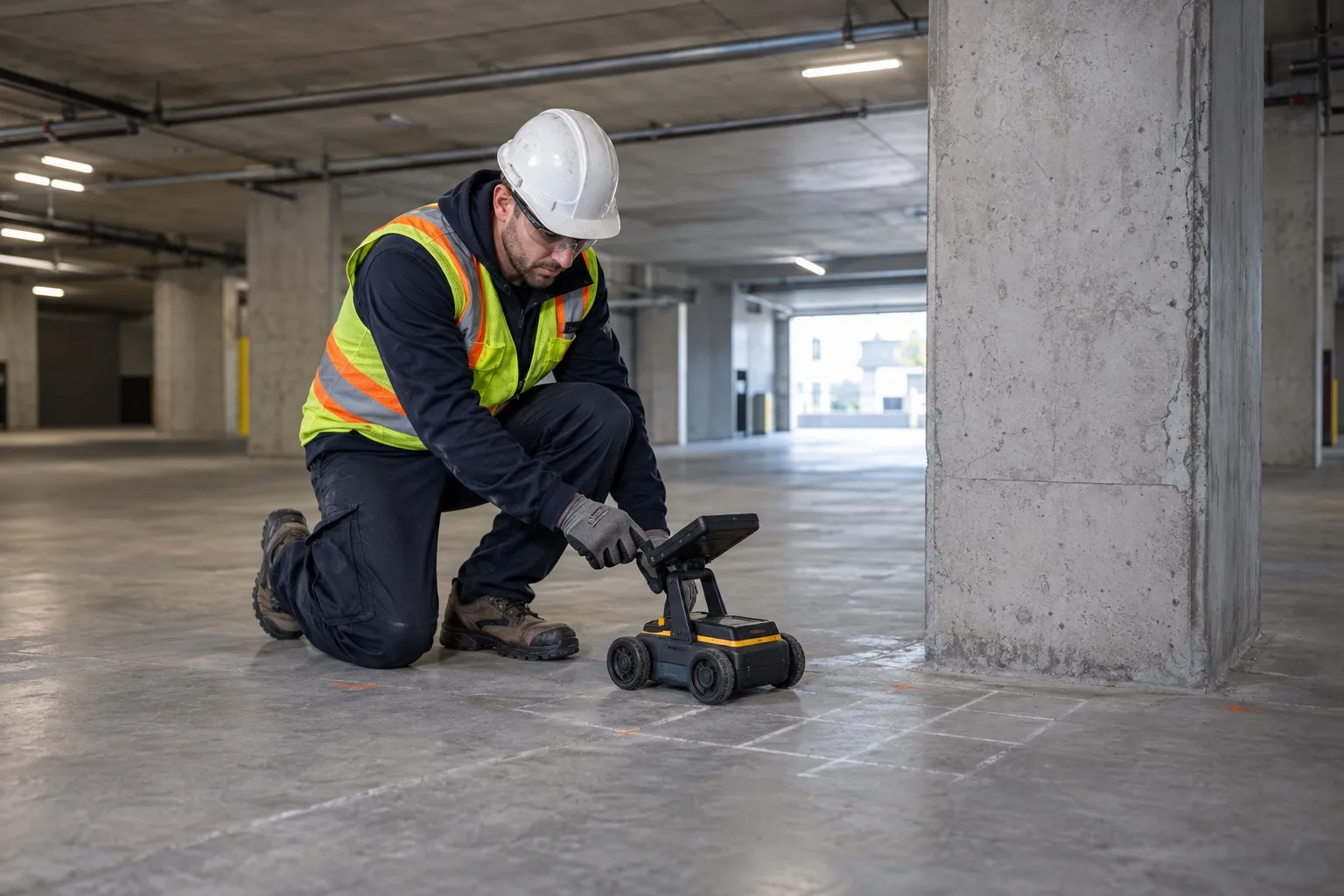
Ground penetrating radar in concrete and slabs
Ground penetrating radar is not only for soil. A high-frequency antenna also inspects concrete before core drilling or saw cutting.
This concrete slab analysis reveals rebar, electrical conduits and post-tension cables. Drilling blind can cut a cable or an embedded pipe, a risk that is simple to eliminate.
How a radar survey works
A visit follows clear steps, from on-site locating to the delivered report. The full process of this underground locating service has a single goal: digging in the right place.
For concrete, a GSSI StructureScan unit takes over on slabs and walls. The logic remains the same: read the subsurface, then document each target for the rest of the work.
- Scanning the property with a GSSI UtilityScan unit
- Analysis of signals and identification of targets
- Colour-coded ground markings, with estimated depths
- Delivery of a usable plan and PDF report
Conclusion
Ground penetrating radar (GPR) offers a reliable window into what lies underground, without excavation or destruction. Properly combined with electromagnetic locating, it locates conduits, tanks, voids and rebar, then places each target on a usable plan.
Before any job, this reading of the subsurface protects your budget, your schedules and the people on site. To start off on the right foot, get a quote tailored to your project and know exactly where to dig.
Frequently asked questions
Can ground penetrating radar really see underground without digging?
Yes. Ground penetrating radar sends electromagnetic pulses into the ground and records the reflections produced by each change in material. This reading reveals the presence of conduits, voids or tanks without any excavation. The targets are then marked on the ground and transferred to a plan, which lets you plan your work and dig in the right place without damaging buried infrastructure.
How deep does ground penetrating radar reach in Quebec?
In Quebec soils, the range is generally between one and three metres, depending on antenna frequency and ground conductivity. Dry sand offers good penetration, while water-saturated clay greatly reduces the depth reached. The chosen frequency is also a trade-off: a low-frequency antenna sees deeper but with less detail, and a high-frequency antenna does the opposite. Each site is assessed individually.
Does ground penetrating radar replace a request to Info-Excavation?
No. A request to Info-Excavation locates the member owners' public utilities free of charge, but only up to your property line. Private utilities on the property, such as a cable to a shed, a pool line or an old tank, are not covered. The radar survey complements this process by locating these private installations, then marks them on the ground to secure your job site before excavation.
Does ground penetrating radar work in concrete?
Yes. A high-frequency antenna, such as the one on the GSSI StructureScan, inspects concrete slabs and walls before core drilling or saw cutting. Ground penetrating radar locates rebar, electrical conduits, post-tension cables and internal voids. This check avoids drilling into a structural element or a pipe embedded in the concrete, a costly and sometimes dangerous incident on a job site.