Non-invasive water leak detection involves locating the route and depth of a buried water line without digging, using ground penetrating radar and electromagnetic locating. This step pinpoints the exact place to inspect, which lets the plumber target their tests and excavate only at the right spot.
A wet patch that keeps reappearing on the lawn, a water bill that rises for no reason or weakening pressure: these signs often point to a faulty line. Before breaking up a driveway or a lawn, non-invasive water leak detection tells you exactly where the pipe runs and at what depth.
This approach is for property owners as well as contractors, plumbers and municipalities who want to limit surprises. The principle remains simple: locate first, dig afterward, and only in the right place.
What non-invasive water leak detection is
Non-invasive water leak detection refers to all the techniques that help pinpoint a leak on a buried line without opening the ground. The goal is not to find the drop of water itself, but the precise route of the pipe that carries it. This is an important nuance to understand before calling a specialist.
Two services that are often confused must be distinguished. Acoustic leak detection listens for the sound of water escaping under pressure. Water line locating, on the other hand, maps the route and estimates the depth of the pipe. These two processes complement each other, but they do not replace each other.
In practice, a route survey serves as a map for the rest of the work. Once the route is known, it becomes possible to inspect, test or repair without turning the property into an excavation site.
Why locating avoids digging blind
Digging without knowing where the line is means risking damage to landscaping, a parking area or another buried utility. A preliminary survey reduces this risk and shortens the duration of the work.
Here are the main benefits of non-invasive locating before taking out the shovel:
- Fewer unnecessary exploratory excavations on the property.
- A smaller work area, so restoration is simpler.
- A plumber who tests in the right place rather than probing at random.
- A more accurate excavation estimate, based on an actual route.
- Better protection for other buried utilities nearby.
Which methods are used to locate a water line
No single technology suits every pipe. The choice depends on the material, access to the line and the surroundings. A water line locating service generally combines several methods to cover every case.
Electromagnetic locating
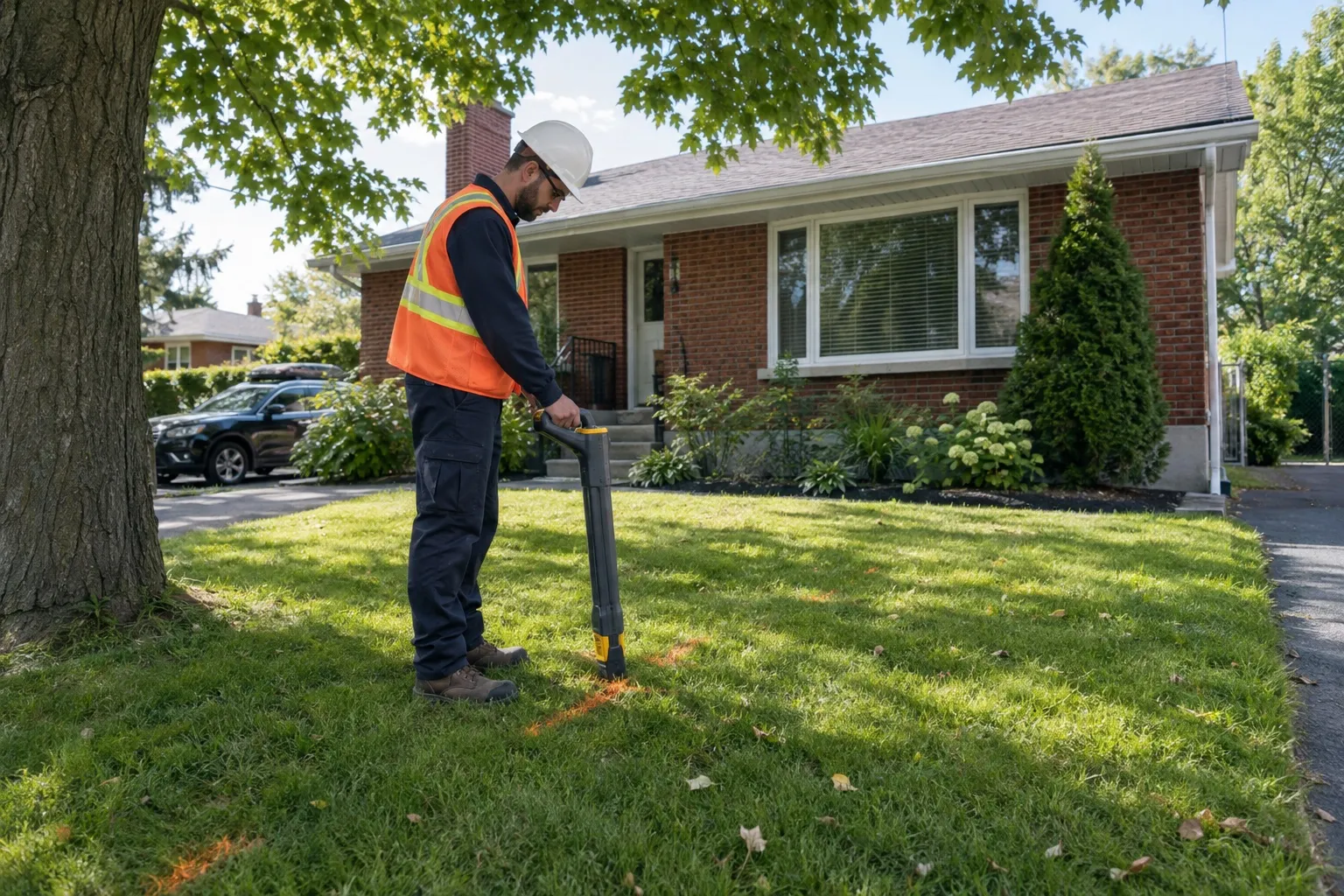
Electromagnetic locating applies to metallic pipes such as copper, cast iron and steel. A signal is injected onto the line, at the building entrance or at a valve, then followed at the surface. This method provides a reliable route and a depth estimate.
GSSI ground penetrating radar
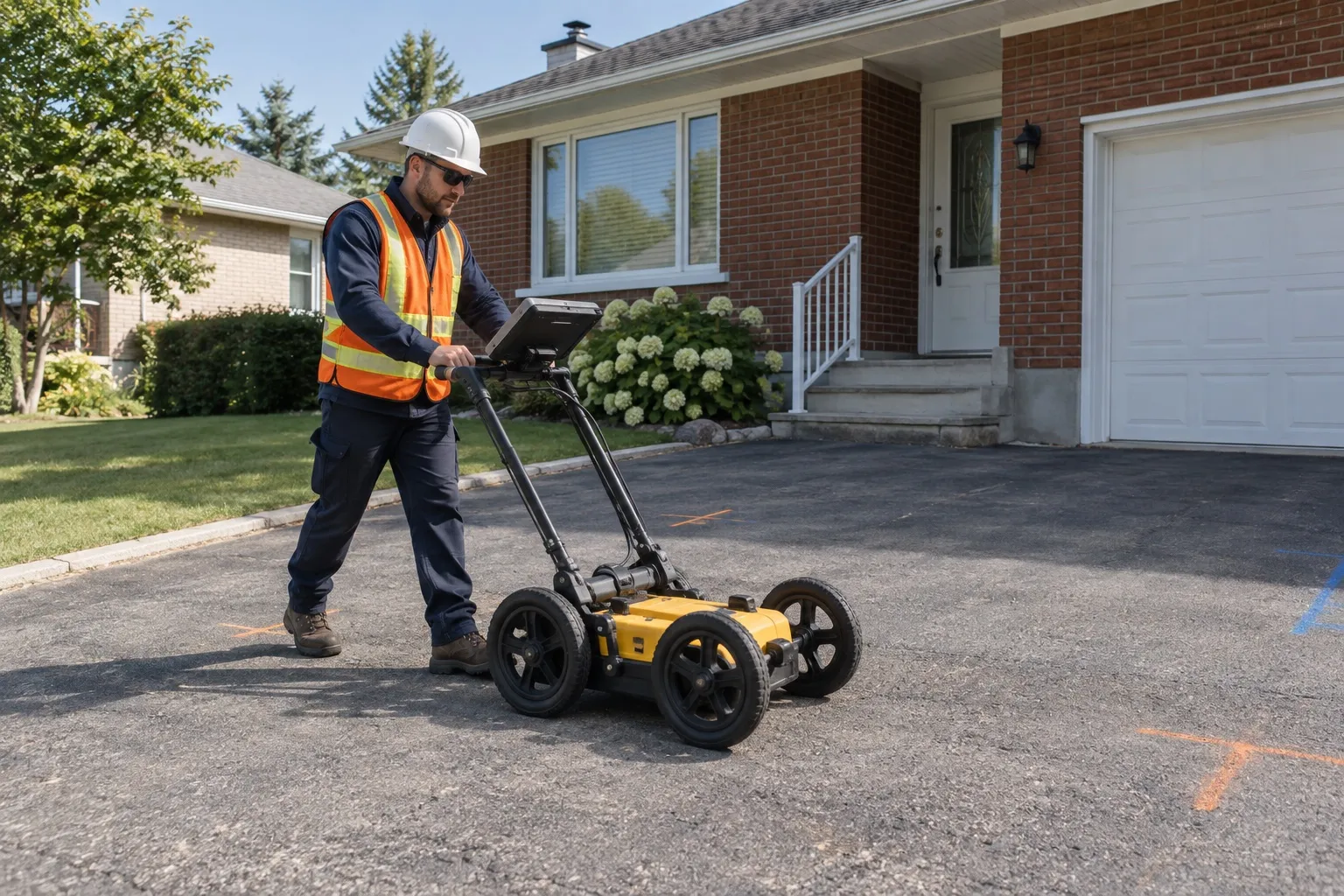
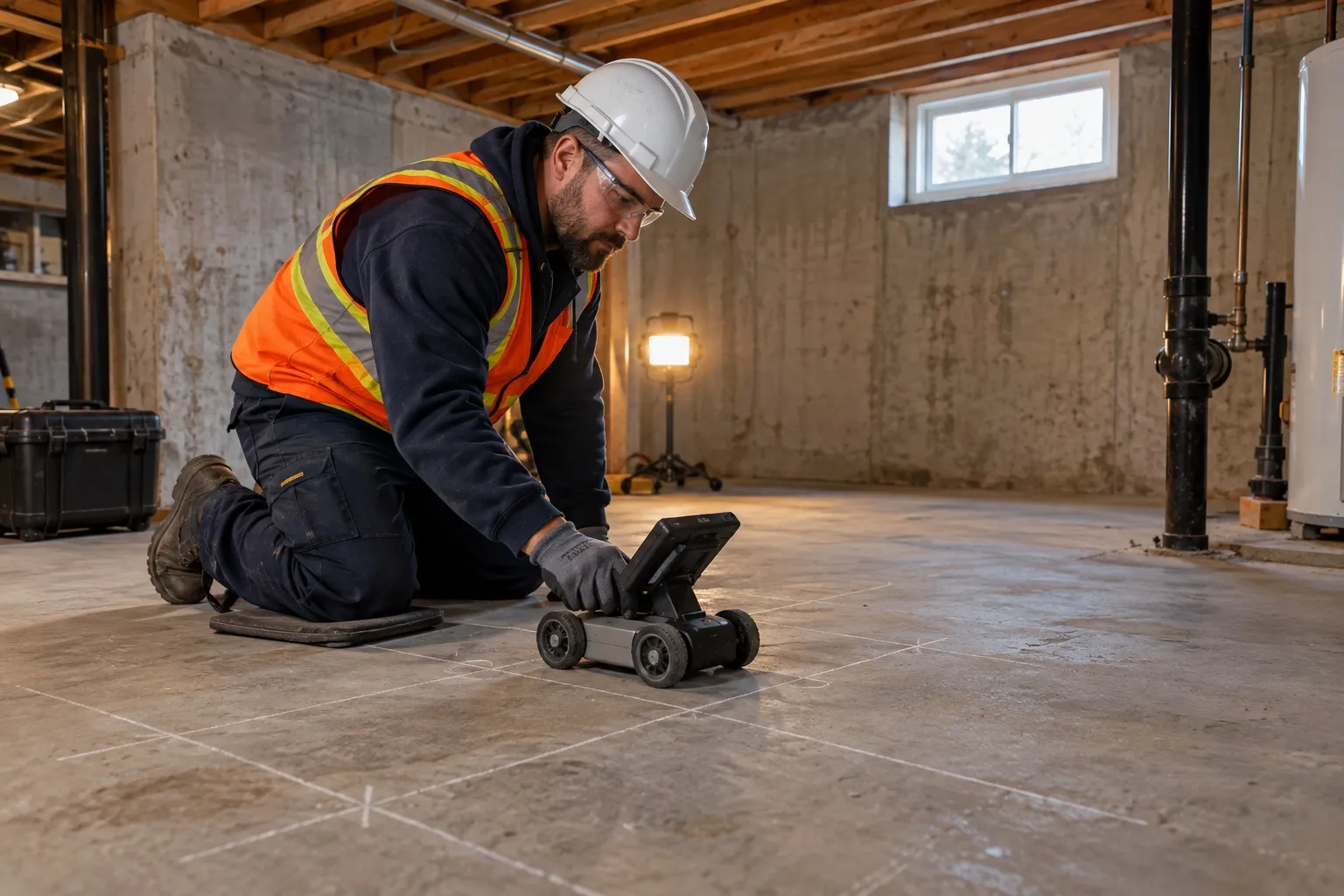
For non-metallic materials such as PVC and HDPE, electromagnetic locating is not enough. A GSSI ground penetrating radar survey sends waves into the ground and reads the echoes returned by buried objects, including plastic pipes and voids.
Transmitting sonde
When the pipe is accessible and empty, a transmitting sonde can be inserted into it. The device then becomes a traceable point from the surface, useful for following a non-metallic conduit along a specific section of its route.
Locating method by pipe material: electromagnetic locating for copper, cast iron and steel; GSSI ground penetrating radar for PVC, HDPE and polyethylene; transmitting sonde for an accessible, empty pipe.
Before starting work, first have the underground pipes located on your property so you dig in the right place the first time.
What locating does not replace
A non-invasive survey locates the route and depth of a pipe, but it does not by itself confirm the exact location of the leak. The plumber then carries out pressure tests or acoustic listening.
The value of the survey is precisely to guide that work. Rather than testing the entire length of a water service line, the plumber focuses on the located section. This saves time and spares you from opening several trenches.
This division of roles clarifies expectations. Locating provides the map; the plumber confirms the leak and makes the repair. Each one steps in at the right time, with the right information in hand.
Public and private utilities, who repairs what
Many people believe that free locating covers the whole property. That is not the case. The damage prevention centre coordinates the locating of its members' utilities, but only up to the property line. You can also submit a free locate request for these public utilities.
On your property, private lines such as the water service line, a private water main, irrigation or a well connection are not covered by this service. They require a private survey. The rule of responsibility follows the same logic, as the City of Saint-Jean-sur-Richelieu points out regarding the private side of the water service connection, which is the owner's responsibility.
The insurance side is also worth checking. According to CAA-Québec, damage caused by a water service line rupture is covered only if your policy includes the water service line breakage endorsement, which is not automatic.
What to expect from the locating report
A good survey is not limited to a few marks on the ground. It leaves a clear record that every party involved in the project can use, from the plumber to the excavator to the City.
A complete deliverable usually includes:
This document becomes a reference for the job site. It helps plan the excavation, document the visit and keep a record of the buried line, which is useful for future work on the same property.
- Ground markings of the route, with visual depth markers.
- Estimated depths along the route of the line.
- A PDF plan ready to share with your plumber or excavator.
Conclusion
Non-invasive water leak detection turns an uncertain operation into a planned process. By first locating the route and depth of the pipe, you limit excavation, protect your property and give the plumber a clear target for their tests. Locating and repair remain two separate but complementary steps. If a line concerns you, a precise survey gives you a plan before you call in the excavator. Request an assessment of your project to locate your water service line before work begins.
Frequently asked questions
What is non-invasive water leak detection?
Non-invasive water leak detection brings together the techniques that help pinpoint a leak on a buried line without breaking the ground. Using ground penetrating radar and electromagnetic locating, a technician traces the route of the pipe and estimates its depth. The result then guides the plumber to the area to inspect, which reduces exploratory excavation and protects your landscaping during targeted repair work.
Can ground penetrating radar detect a water leak directly?
Ground penetrating radar does not locate a leak as such. It shows the route and depth of lines, including PVC or HDPE pipes that electromagnetic locating cannot pick up. Once the route is known, the plumber focuses acoustic or pressure tests on the right section, without probing the property at random. Locating and repair therefore remain two complementary steps.
Does Info-Excavation locate private water lines?
No. Info-Excavation coordinates the locating of its members' utilities, such as electricity, gas and telecommunications, but only up to your property line. Private lines on your property, including the water service line, a private water main, irrigation or the well, are not covered by this free service. For these pipes, a private survey using ground penetrating radar or electromagnetic locating becomes necessary before any excavation.
How long before digging should locating be planned?
It is best to schedule the survey before booking the excavator, because the results guide the entire job. For public utilities, Quebec regulations require contacting the damage prevention centre several business days in advance. For a private survey on your property, allow for a crew visit a few days ahead in order to get the markings and the plan before the first shovelful.